
Remote and hybrid work is now the default for knowledge teams, but physical distance quietly erodes the small interactions that build real human connection. It pulls away the hallway chat, the shared laugh, and the spontaneous recognition that keep individuals linked to their coworkers.
The tricky part is that engagement is not the same as productivity, meaning a team can easily hit deadlines while slowly disengaging from each other.
The warning signs are incredibly easy to miss when you cannot see the room. Cameras clicking off, prolonged silence in meetings, and lagging response rates over chat point directly to a shrinking cultural bond.
This disconnection happens even though 17% of workers who quit their jobs explicitly state they did so because their flexible working arrangements changed, according to a study. People love the flexibility, but the daily isolation still takes a heavy toll on team morale.
To help you engage remote employees and keep them as satisfied and connected as if in a face to face setup, we’ll dive into:
Remote employee engagement is the emotional commitment and connection a distributed employee feels toward their work, their team, and the organization, expressed through effort, communication, and staying.
It’s important to separate this term from employee satisfaction or high productivity.
A comfortable employee might feel satisfied with their setup but completely disconnected from the corporate goals. Similarly, a stressed person can produce significant work right before quitting. All three metrics operate independently.
When people work away from a central office, certain workplace elements weaken rapidly. These vulnerable drivers include daily recognition, a sense of belonging, communication clarity, growth visibility, and protection against burnout and isolation.
If you ignore these specific areas, remote employee engagement activities will fail to patch the structural holes.
Leaving disengagement unaddressed carries steep costs for a virtual organization. It regularly manifests as expensive talent turnover, quiet quitting, and a drop in spontaneous collaboration across different departments.Teams start working in rigid silos, individuals stop sharing critical updates, and projects take longer to complete.
This is exactly why building deliberate operational structures matters long before you look at any tools.

Instead of treating remote employee engagement as a series of one-off parties, successful companies view it as their standard operating system. These are the always-on structural habits that shape your day-to-day workflow.
Flooding your team with constant chat messages creates exhausting noise instead of actual connection. You need clear agreements on when to use real-time video calls and when to leave asynchronous updates in your project management tools. Reserving live calls for complex brainstorms allows people to use text for status updates, which lets everyone protect their focus.
For hybrid setups: Documenting decisions in writing prevents the office-based crew from accidentally leaving remote coworkers out of important updates.
Distributed employees lack the natural visibility of a physical office, meaning their hard work can go unnoticed by peers. Creating dedicated public feeds for shout-outs and celebrating wins during team meetings bridges this distance. When you link your praise to specific project outcomes, the entire team learns what excellent work looks like in a remote setting.
For fully remote teams: You have to rely entirely on these highly visible digital moments to replace the casual praise that used to happen in corporate hallways.
Professional advancement becomes hard to track when people work from their living rooms, which can make individuals feel stuck. You can keep talent around by setting up clear internal mentorship pairings and building structured skills training directly into the normal workweek. Interactive learning exercises work much better than boring, hours-long seminars that people sleep through.
Tools like Kvistly fit directly into this workflow, using quick, automated review games to handle team training and onboarding without adding stressful administrative work.
For hybrid setups: Running digital training logs allows team members working from home to access development opportunities at the same rate as local office staff.
Distributed teams require deliberately planned cultural rituals because casual friendships don’t form by accident over chat. Setting aside the first few minutes of standard meetings for non-work updates or organizing regular, casual game sessions helps form genuine peer connections. These designed shared moments provide the necessary foundation before you pick out specific engagement ideas for remote teams.
For hybrid setups: Schedule your online social interactions on the specific days when both remote and office-based staff are simultaneously logged into chat.
Virtual settings make it very easy for overachieving workers to overextend themselves, leading to silent exhaustion. Managers must respect local time zones, discourage late-night messaging, and actively watch for indicators of isolation, like sudden drops in meeting participation.
While active social tools keep teams connected, severe or clinical mental health challenges require direct support from formal Employee Assistance Programs and professional medical resources. Keeping work expectations balanced remains your primary defense against sudden team turnover.
For fully remote teams: Pay extra attention to people who rarely turn on their cameras, as a total lack of facial interaction often signals deep isolation.
Tracking your team sentiment through regular, brief pulse surveys prevents you from guessing about the health of your workplace culture. You must share the results openly and change policies based on that feedback, or employees will stop filling out your forms. Gathering participation metrics during group sessions gives you real-time data on who is checking out.
Interactive tools like Kvistly automatically surface these engagement signals through their built-in reporting views, showing you live response rates so you can adjust your management approach instantly.
For hybrid setups: Filter your survey data by location to see if office-bound teams feel significantly more connected to leadership than home-based colleagues.

Moving past operational habits, we have specific remote employee engagement activities that you can introduce directly into your team schedule this week to help engage remote employees.
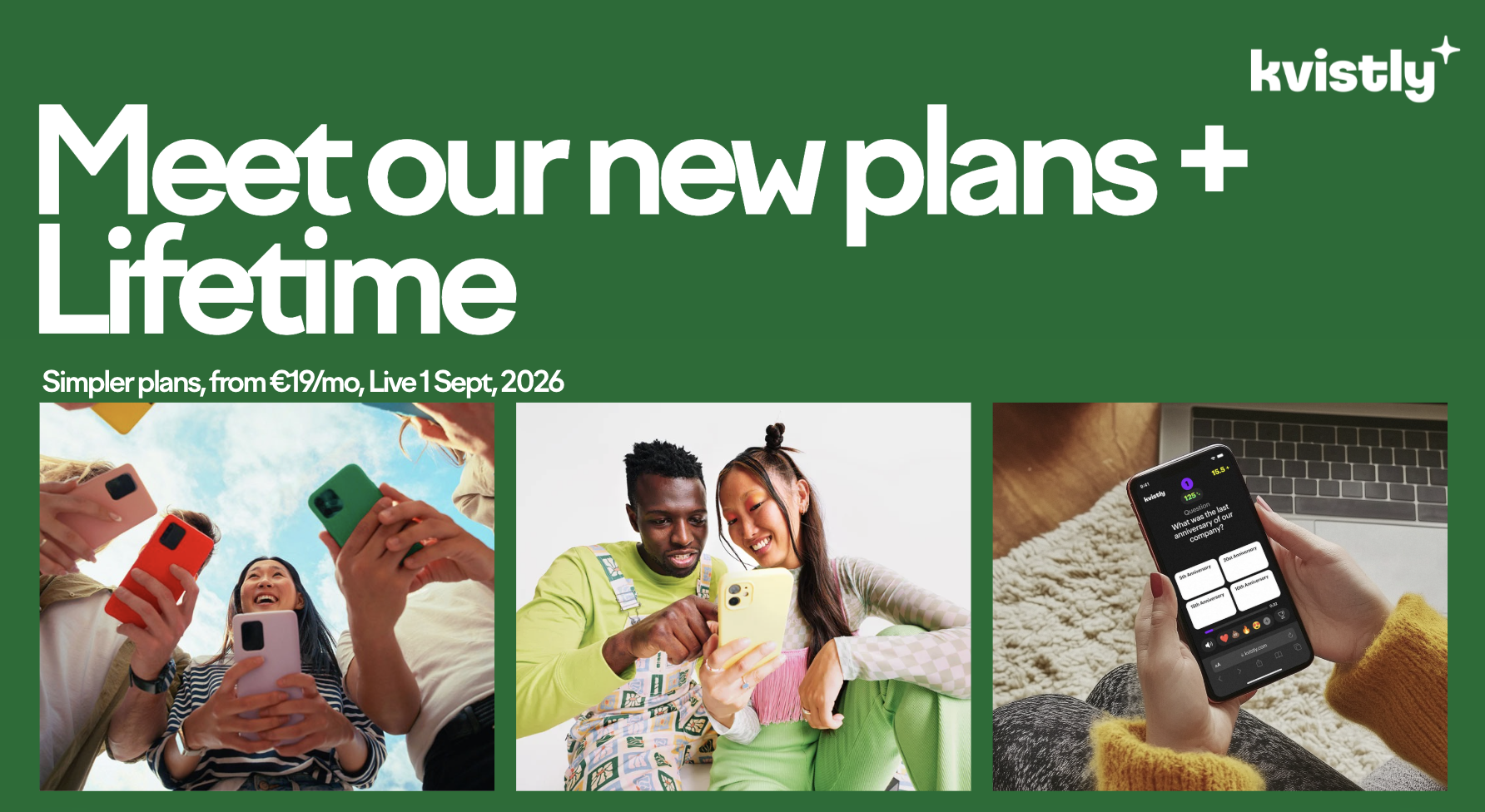
This activity uses automated trivia to skip manual question writing entirely and save more time. The session host enters a preferred topic or pastes an existing text file into Kvistly, which instantly generates a full game. To run it, you drop the game link or a QR code into your video meeting chat.
Coworkers open it on their phones or browsers without configuring any software downloads. A live leaderboard pairs with a unique betting mechanic where people wager points on their answers, keeping the final scores competitive even if players do not know the trivia topic perfectly.
This game tests your team on corporate milestones, historical facts, and strange colleague fun facts. To set this up, paste text from your company handbook or public website bio page directly into Kvistly to build the questionnaire automatically.
It acts as an easy introduction to your corporate timeline for new hires. You display the questions on a shared video screen while everyone submits answers through their mobile devices.

This strategy introduces coworkers who rarely interact during their standard project tasks. You use an internal automation program or a simple spreadsheet list to pair up staff members randomly each week. Participation must remain completely optional to respect heavy workloads. The paired individuals schedule a video call to talk about non-work topics over their morning coffee or tea.
This classic group game works perfectly as a quick icebreaker before diving into serious operational discussions. Each participant writes down two true facts and one plausible lie about their life experiences. They read them aloud or type them directly into the video chat window. The remaining team members use a quick meeting poll to vote on which statement is the false claim.
This exercise provides a low-pressure way for coworkers to share details about their personal interests. Every attendee takes a turn grabbing an interesting object from their immediate desk area or home workspace. They hold it up to the camera and explain the backstory behind it in a couple of sentences. This window into their home environment builds natural comfort among distributed colleagues.
This social event shifts focus away from spreadsheets and metrics by introducing popular external trivia topics. You use Kvistly to build a custom game centered around specific music decades, movie history, or pop culture trends. It functions as a standalone evening social or a casual Friday afternoon wind-down event.
The scoring updates in real-time on screen, driving friendly competition across the company roster.
This short cultural ritual embeds peer recognition directly into your recurring operational tracking. At the start of the week, team members drop one professional win from the previous week and one core objective for the upcoming days into a shared text channel. This visibility updates everyone on current progress without requiring long, drawn-out status meetings. It ensures small, quiet contributions get highlighted publicly every single week.
This activity replaces boring, passive corporate lectures with an immediate interactive review. After running a technical workshop, the trainer launches a brief Kvistly game to test information retention on the spot. Employees answer quick questions about the material they just heard, forcing their brains to recall information while the topic is fresh. The organizer uses the final report view to see which specific points confused the audience.

Artificial intelligence enhances remote employee engagement by cutting down the time and friction involved in building team connections. It takes over the tedious administrative work by tossing out manual prep, building custom trivia options in seconds, and tailoring topics to your specific meeting focus.
And this changes how managers work.
Instead of spending your valuable evening writing quiz options, you copy and paste a company page right into an app like Kvistly to let the AI spin up the questions. This frees you up to hang out with your team and actually host the event instead of messing around with presentation software.
You get to see how active your group is through live leaderboard responses rather than plain tracking logs.
Kvistly built these automated features right into its system. It matches instant AI generation with real-time score tracking and a confidence betting setup that keeps everyone paying attention.
Your team can log in instantly from their phones without any app downloads, and the system can handle English, Spanish, Brazilian Portuguese, German, French, and Russian natively. Once you wrap up, you can review clear participation data directly in your reporting view.
To engage remote employees successfully, you need to focus on consistent small habits paired with a few genuinely shared moments. Throwing money at a larger budget or adding extra mandatory status meetings usually backfires, creating more screen fatigue for an already tired team.
Real connection comes entirely from how you structure your communication across the standard workweek.
While a quiz application cannot replace your core management processes, Kvistly provides an easy way to run your interactive team events. It takes the manual prep out of planning and lets you host your weekly trivia or training reviews using automated features. You get straightforward tools that keep individuals talking and participating naturally.
If you want to see how this automation handles the administrative work for your next meeting, you can try Kvistly for free or book a quick live demo with our team.
The term remote employee engagement describes the emotional commitment and daily connection that distributed staff members feel toward their workplace goals, coworkers, and organization. Employees show this alignment through active communication, consistent daily effort, and a desire to stay with the company long-term.
You maintain high interest by establishing clear asynchronous work boundaries and publicly celebrating individual project contributions during team syncs. It also helps to embed career development opportunities and structured non-work connection points directly into the regular workweek.
Successful options include live multiplayer trivia sessions, company culture trivia games, and automated virtual coffee pairings that connect different departments. Short weekly habits like goal-and-win sharing in your team chat also build strong social bonds.
AI cuts out the manual preparation work by instantly building tailored group trivia or training questionnaires from your uploaded text documents. This automation lets team leaders spend their meetings interacting with colleagues instead of manually formatting presentation slides.
Helpful systems rely on instant link or QR code log-ins, real-time score leaderboards, and interactive answer-betting mechanics to maintain group focus. Built-in multi-language options and post-session participation reports also give managers clear visibility into team interest.
You accommodate international colleagues by leaning on asynchronous text channels for social rituals and rotating recurring live meeting hours to share the burden of early or late calls. Documenting all key team choices in writing keeps distributed staff members included.
Short cultural rituals or chat-based win shares work best when you run them weekly to maintain a steady operational rhythm. For deep-dive social games or themed trivia nights, a monthly or end-of-quarter schedule keeps the events feeling fresh.
Yes, because interactive trivia forces active information recall and creates friendly competition that naturally gets people talking on camera. They replace passive, boring slideshow lectures with direct participation where everyone joins in instantly from their phones.