
![10+1 Best Quizlet Alternatives in 2026 [Free + Paid]](https://cdn.prod.website-files.com/6664420174bc931d092b1a2d/69ab09c06ed2e6d82edcbe3a_graphic-question-mark-asking-symbol.jpg)
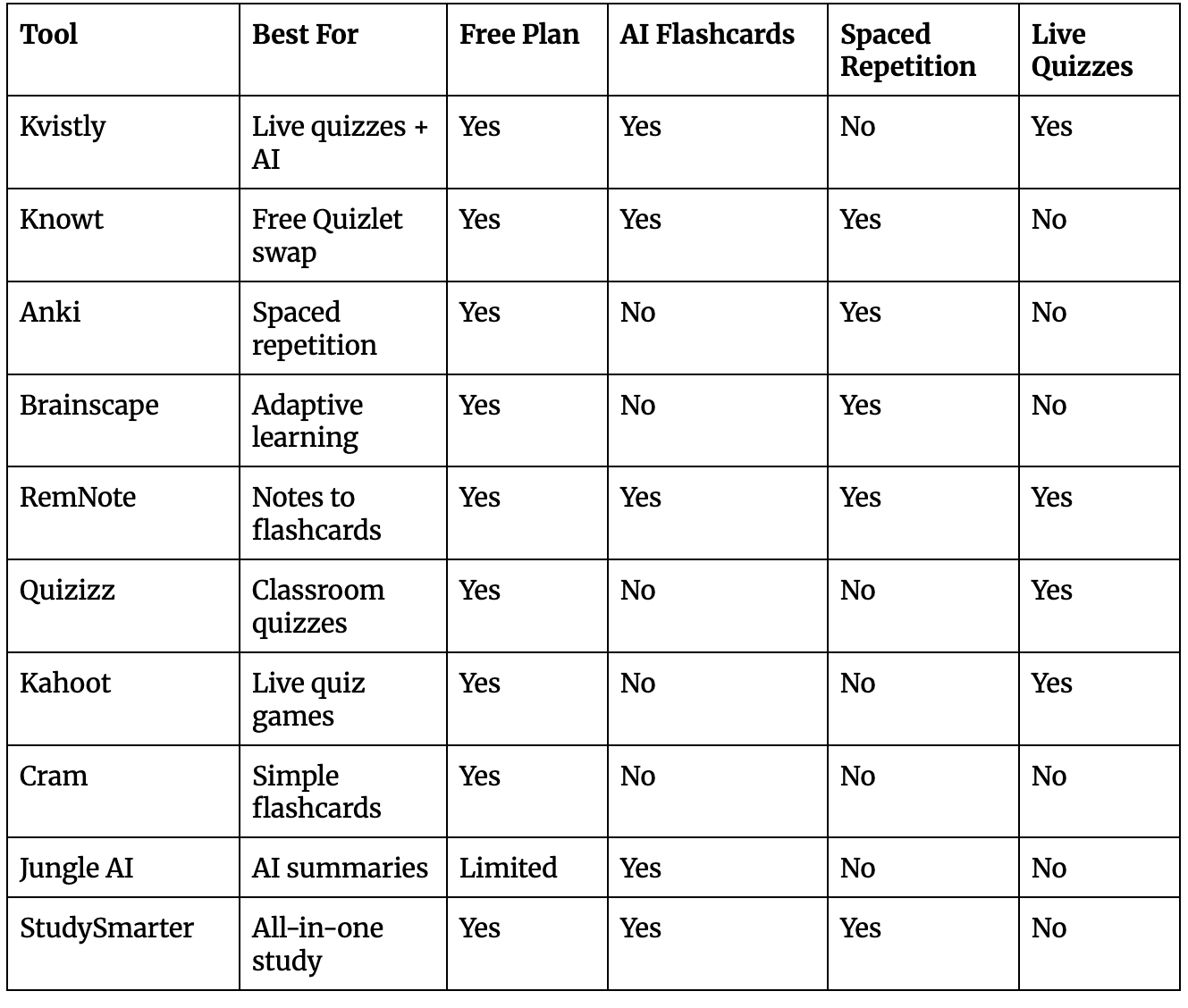
The best Quizlet alternatives in 2026 are Kvistly (best for live quizzes and AI), Knowt (best free replacement), and Anki (best for serious exam prep). If you're teaching or running live sessions, Kvistly stands out. If you want a free swap with similar features, Knowt is the easiest move. And if you're preparing for high-stakes exams, Anki’s spaced repetition is hard to beat.
Quizlet used to be the go-to study tool for millions of students, but things have changed. Prices have gone up, and key features like AI flashcards and advanced practice modes are now behind a paywall. For many users, the free plan no longer covers what they need.
At the same time, better alternatives have emerged. Some are completely free. Some use AI to speed up study workflows. And a few go beyond flashcards entirely, offering live quizzes, analytics, and more engaging ways to learn.
The shift is part of a larger trend. The global EdTech market is projected to cross $400 billion by 2030, with AI-powered learning tools driving much of that growth.
In this guide, you’ll find a breakdown of the best Quizlet alternatives based on how you actually study. Some tools are built for long-term retention with spaced repetition. Others focus on live quizzes, collaboration, or quick revision.
We evaluated each tool across five criteria: AI flashcard generation quality, free plan generosity, mobile usability, live and collaboration features, and ease of getting started.
To keep things consistent, we used the same set of study notes across tools and compared how each one handled output quality, setup time, and overall usability. Some tools generated usable flashcards in seconds, while others required more manual cleanup.
Pricing and feature limits were verified directly from each tool’s website at the time of writing.
Here’s why more people are looking for Quizlet alternatives.
Let's be honest about the problems.
Before diving into the list of what the best alternatives are, let’s explore the factors that make a great study tool.
Ask these questions to filter the best study tool for your daily use:
Keep these in mind as we go through the top picks.
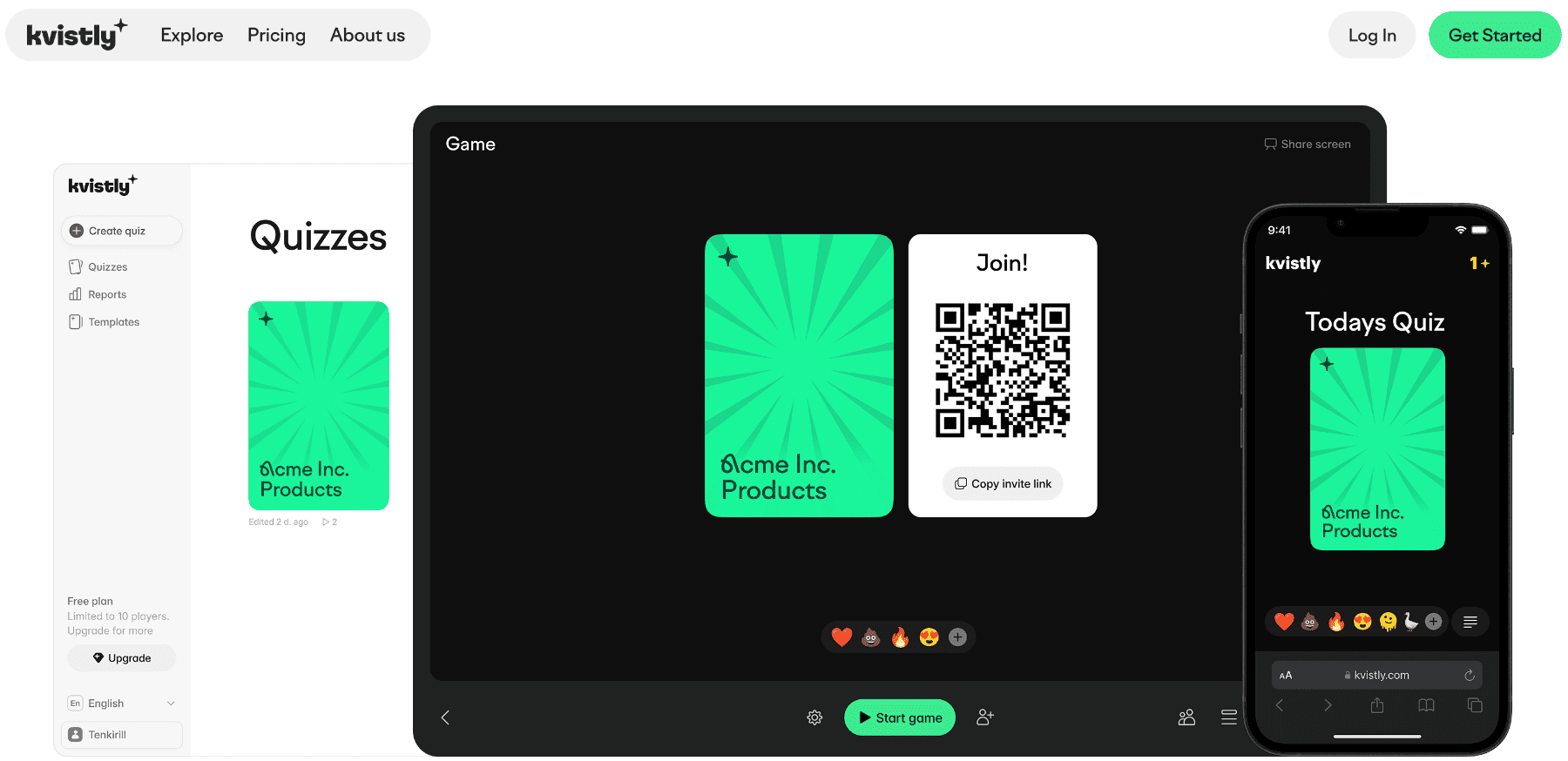
Kvistly is not your typical flashcard site. It's built around live, interactive quizzes. It uses AI to make creating them ridiculously fast.
You can upload a document, paste in your notes, or enter a topic, and Kvistly's AI quiz generator will build a full quiz in seconds. When we tested this with a standard set of study notes, the quiz was ready in under 30 seconds with no editing needed.
What really sets it apart is the risk mechanics feature. Players bet on their own confidence when answering, which pushes active thinking, not just guessing. This makes it a stronger learning tool, not just a fun one.
Kvistly also gives you real-time analytics. You can see exactly which questions students are getting wrong, track participation, and adjust your teaching. That's something Quizlet simply doesn't offer on a free plan.
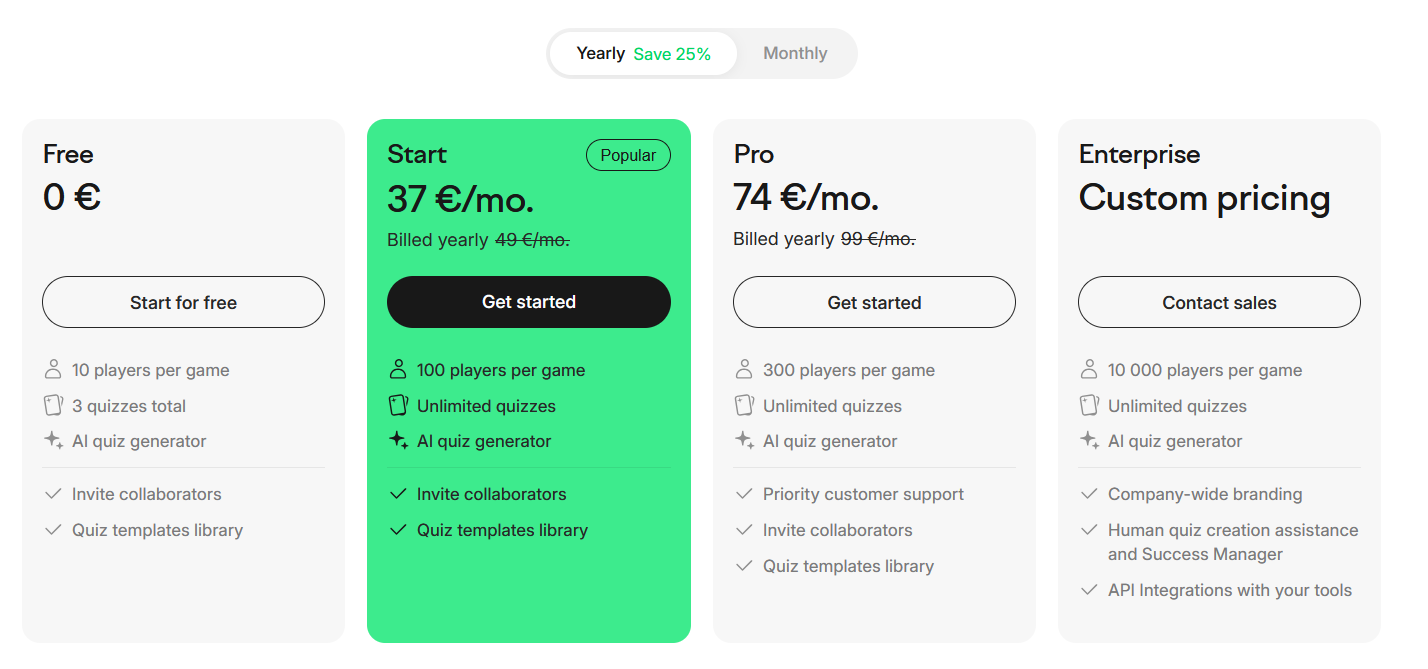
The free plan includes AI quiz generation, up to 10 players per game, and 3 quizzes. Paid plans start at €37/month. Public school teachers get full access for free.
Classrooms, corporate training, live study sessions, and HR and L&D teams who want AI-generated quizzes with real engagement data.
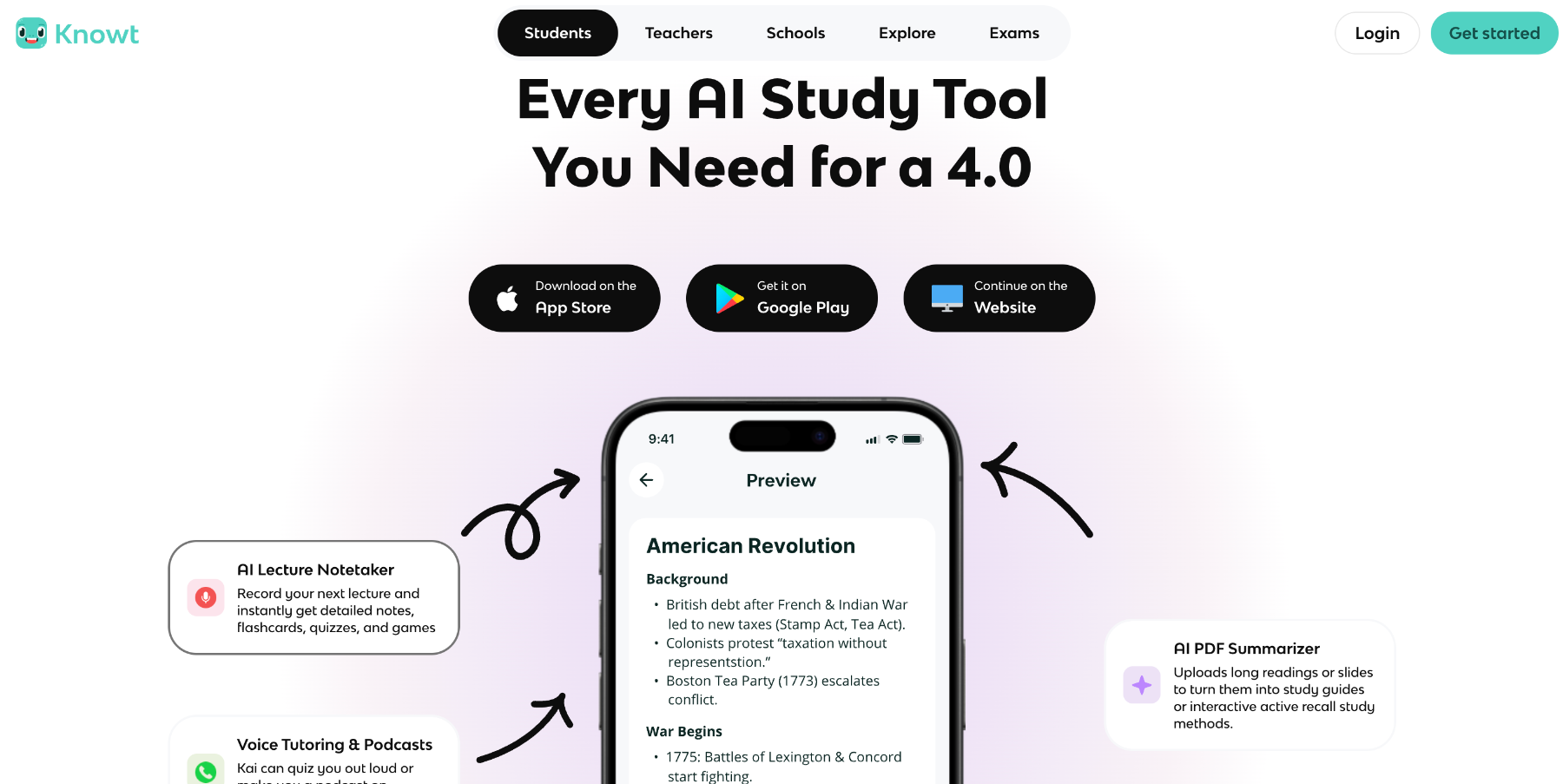
Knowt is probably the most direct Quizlet alternative free users will find. It lets you import your existing Quizlet sets, so switching is easy. It also has spaced repetition, free flashcards, and multiple study modes.
It's especially popular with high school and college students who want the Quizlet experience without the price tag. The import process took us less than a minute, and the study modes felt immediately familiar.
Paid plans start at $12.49/month.
Students looking to switch from Quizlet without losing their study sets.
Anki is the gold standard for spaced repetition. It uses an algorithm to show you flashcards right before you're about to forget them. This has been scientifically proven to improve long-term memory.
It's not the prettiest app as the interface feels dated. The interface feels dated, and getting your first deck set up properly takes longer than any other tool on this list. When we first set up a test deck from scratch, it took about 20 minutes to configure card templates and intervals correctly, something Kvistly would have handled in seconds.
But for medical students, language learners, and anyone who needs to retain large amounts of information, nothing beats it.
Anki is completely free on desktop and Android. The iOS app costs a one-time fee of $24.99.
Long-term memorization and high-stakes exams.
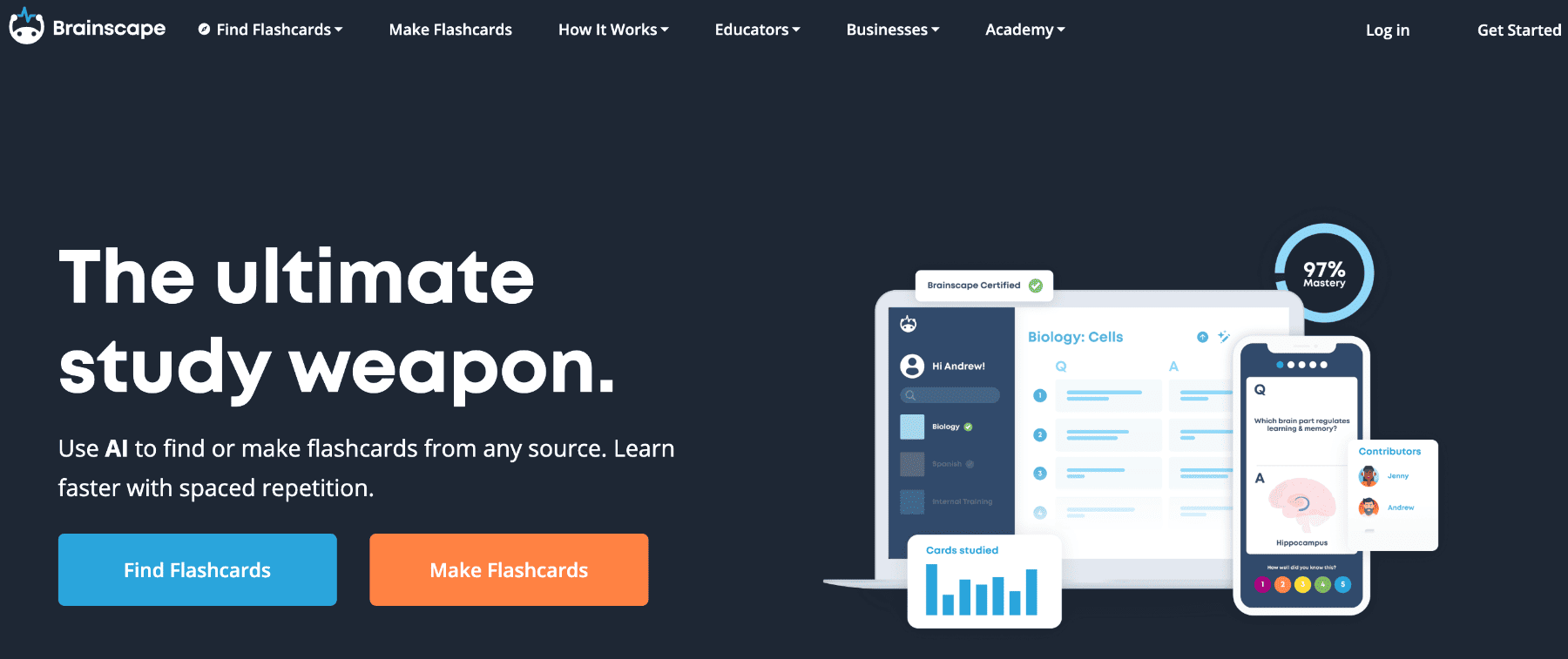
Brainscape is a Quizlet alternative that uses a confidence-based repetition system. After each card, you rate how well you knew the answer on a scale of 1 to 5. The app then repeats weaker cards more often and backs off on the ones you've mastered.
It's one of the best flashcard websites for people who want something smarter than simple shuffling. The mobile app is clean and easy to use, making it a great flashcard app for studying on the go.
Paid plans start at $7.99/month.
Self-paced learners who want adaptive study sessions.
RemNote does something clever: it lets you create flashcards directly inside your notes. You write your notes normally, highlight a concept, and it becomes a flashcard automatically.
This makes it a great tool if you want to turn notes into flashcards without doing double the work. It also has bi-directional linking, which means your notes and flashcards stay connected to each other.
Paid plans start at $8/month.
Note-takers who want seamless notes-to-flashcards conversion.
Quizizz (now Wayground) is a great free study website for teachers who want to run live quiz competitions. Students join on their phones, answer questions, and compete on a real-time leaderboard.
It also has a homework mode, so students can complete quizzes on their own time. There's a large library of pre-made quiz sets, which saves teachers a lot of prep time. In testing, we found a ready-to-use quiz on almost any topic in under a minute, which is genuinely useful when you’re short on prep time.
No information is available on public portals regarding its pricing.
Teachers running classroom quizzes and review sessions.
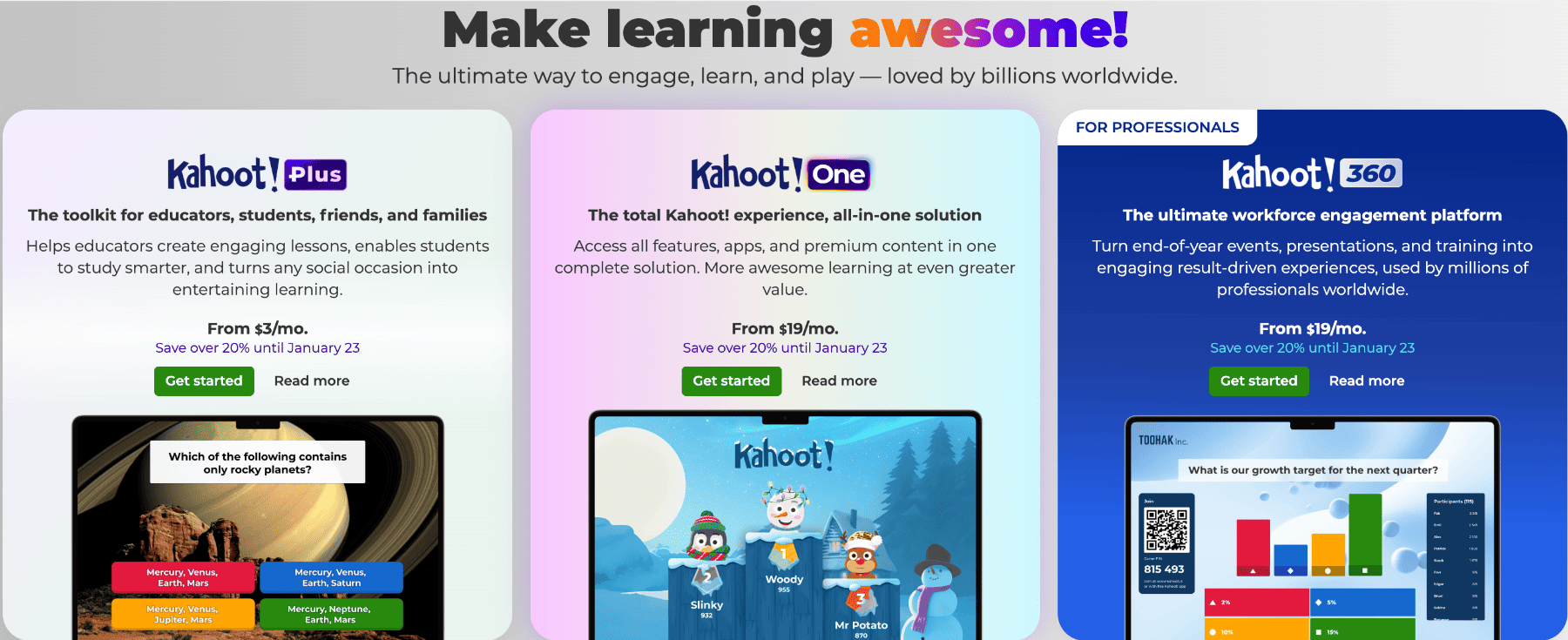
Kahoot is the most well-known live quiz platform. If you've been in a classroom in the last decade, you've probably played it.
It's fast, fun, and easy to set up. Teachers share a game code, students join, and the competition begins. It's less focused on deep learning and more on engagement. But for review sessions and icebreakers, it works great.
Paid plans start at $3/month.
Quick, high-energy review games.
Also check out the list of the best Kahoot alternatives for more options.
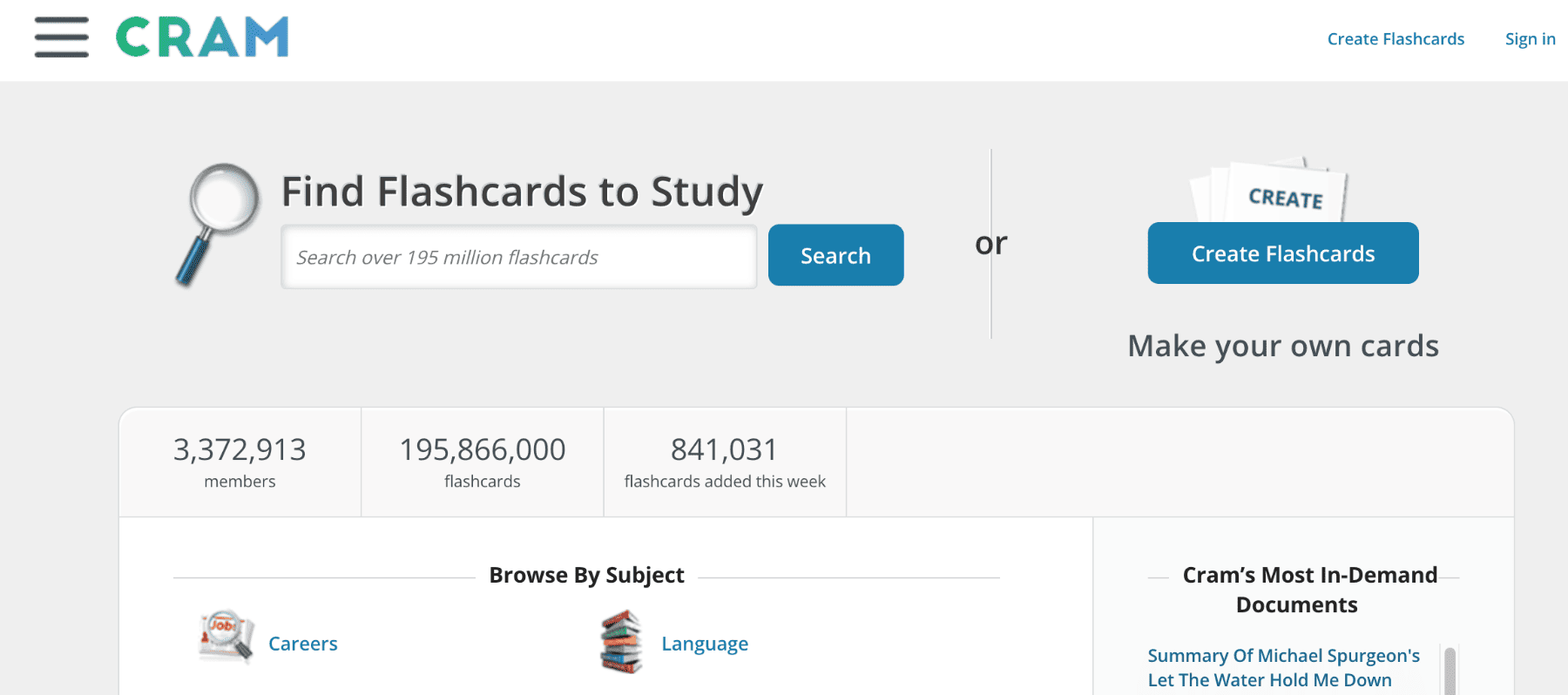
Cram is one of the most straightforward free flashcard websites out there. You create a deck, study it, and that's pretty much it.
There's no AI, no spaced repetition algorithm, and no live sessions. But sometimes simple is exactly what you need. It's a solid option for students who just want to make flashcards online for free without any fuss.
Free for basic use.
Users already invested in the Cram ecosystem who need basic flashcard sharing without switching platforms.
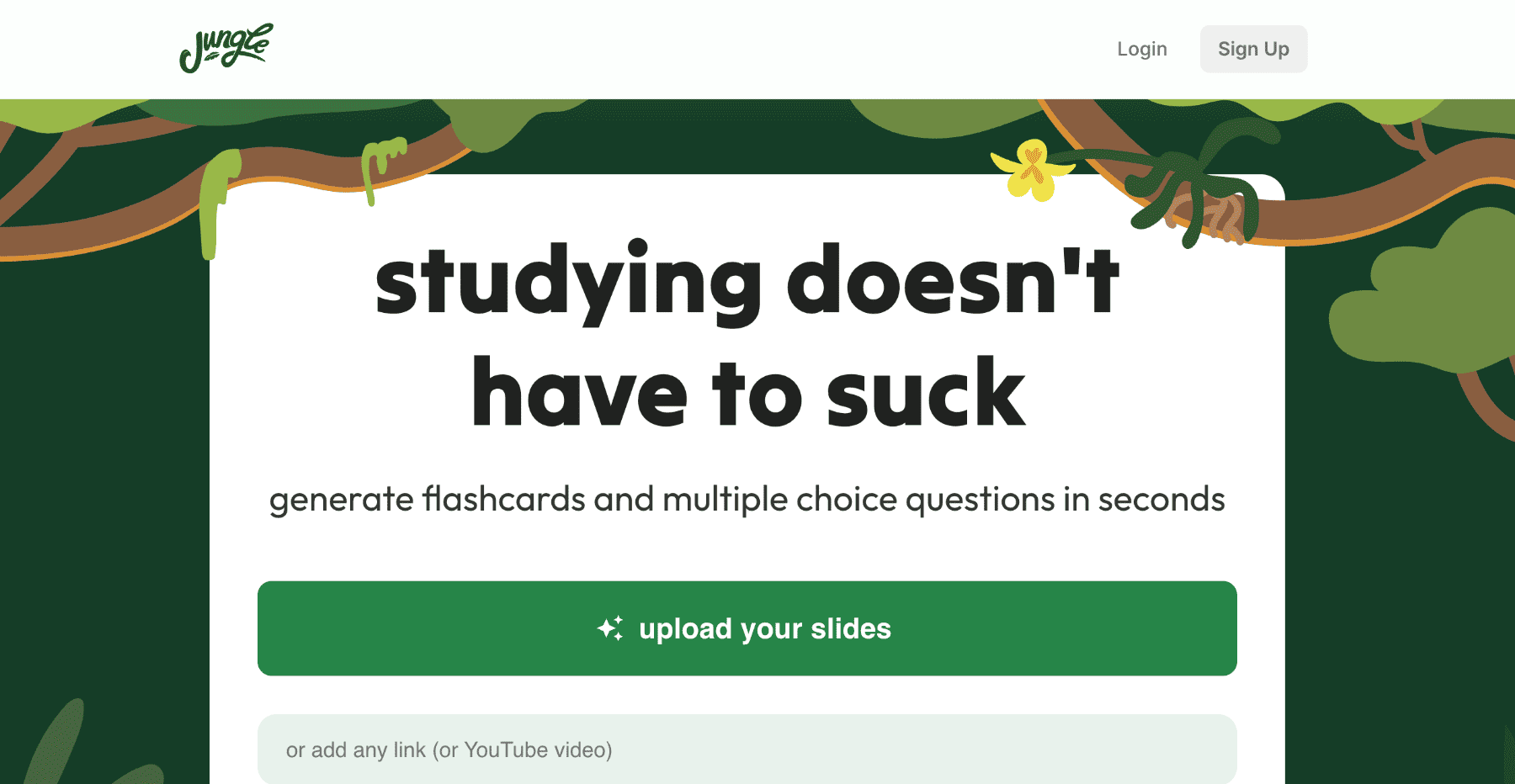
JungleAI focuses on using AI to generate flashcards and learning summaries from your content. Upload a PDF or paste text, and the AI flashcard generator does the rest.
It's one of the better tools if you want to study from existing documents without manually creating cards. The interface is clean, and the AI output is generally accurate.
Paid plans start at $12/learner/month.
Students who want AI to handle the heavy lifting.
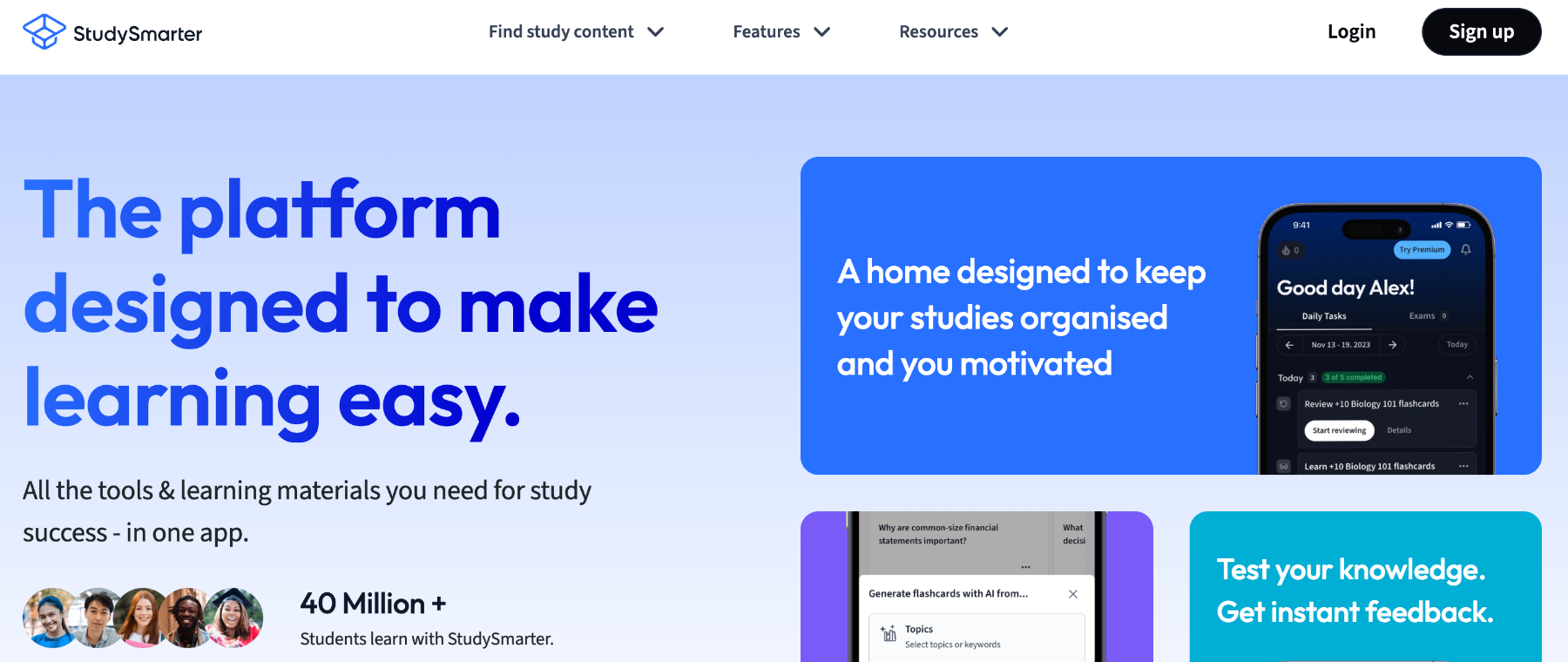
StudySmarter combines flashcards, notes, practice exams, and a study planner in one platform. It's one of the most complete free study websites for students who want everything in one place.
It also has AI features that help generate flashcards and quizzes from your uploaded documents. The community library is huge, with millions of shared study sets across every subject.
Premium plans start at $150/hour for long term personalized tutoring.
Students who want a single, mobile-centric study hub that integrates planning, materials, and AI assistance rather than juggling separate tools for each task.
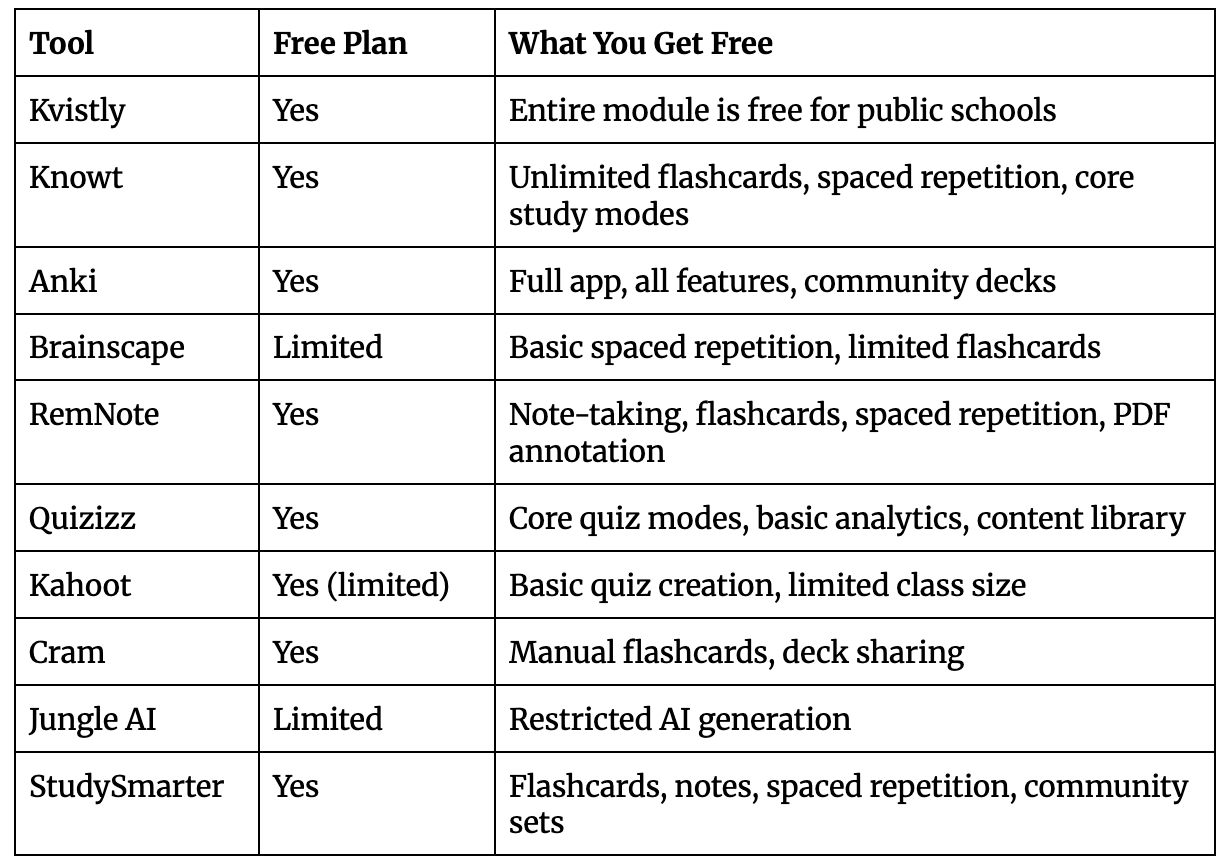
Yes there are, and quite a few good ones, too. Kvistly, Knowt, Anki, Cram, and StudySmarter all have free plans that cover the basics well. Knowt in particular is the closest free Quizlet alternative, since you can import your existing Quizlet sets and use spaced repetition without paying.
If you're specifically looking for websites like Quizlet that are free, start with Knowt or StudySmarter. For AI flashcards at no cost, Kvistly and JungleAI are worth checking out.
Flashcards and quizzes help you learn the material, but studying isn't only about memorizing at some point you have to write the essay, the lab report, or the application. That's where a study toolkit usually has a gap.
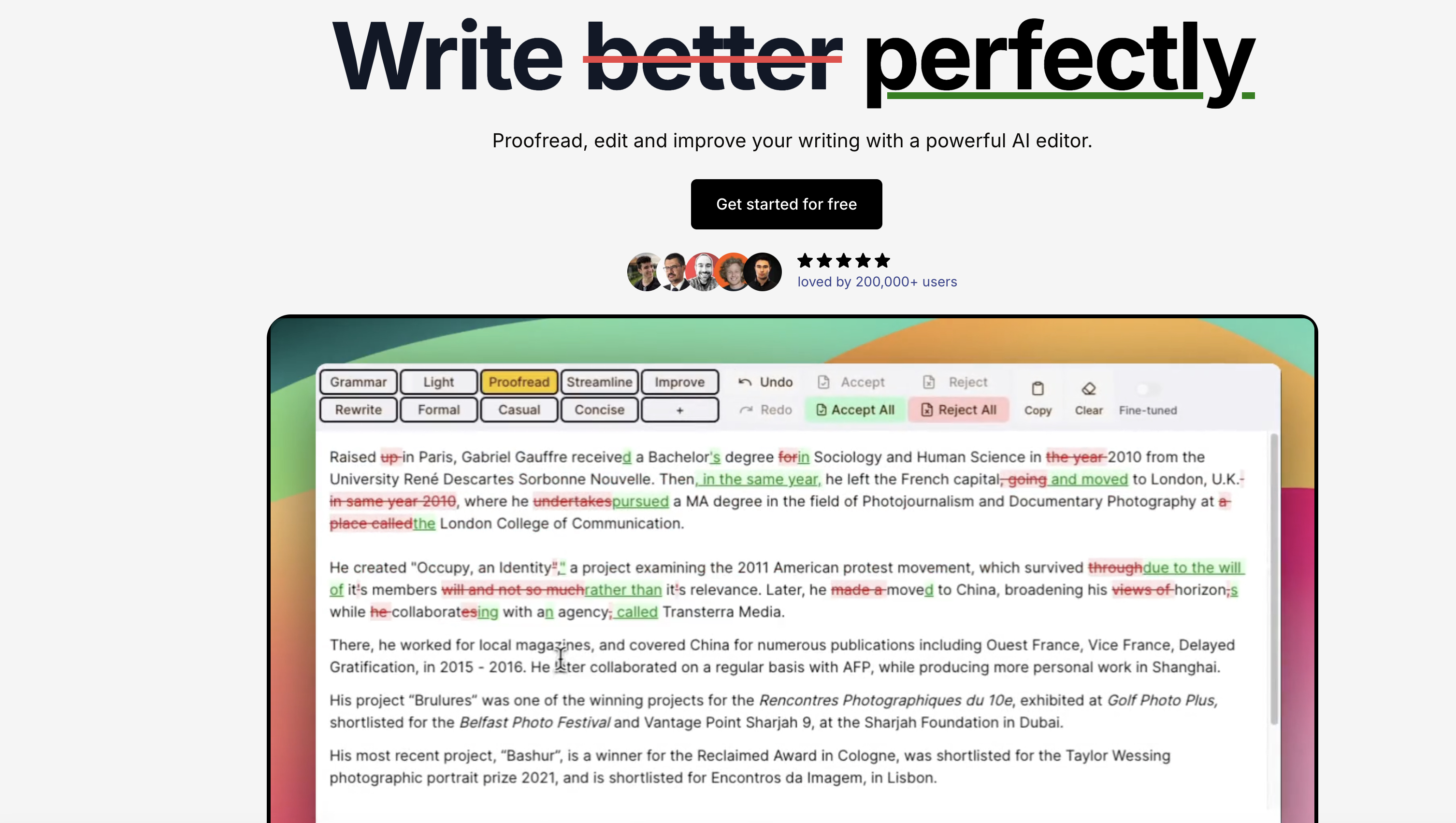
EditGPT fills it. It's an AI proofreading and editing tool that checks your grammar, tightens your phrasing, and cleans up your writing directly inside your browser or favorite editor. For students, that means turning a rough draft into something submission-ready without copying and pasting into three different tools.
It pairs well with anything on this list: use Kvistly or Knowt to master the concepts, then run your written assignments through an AI tool for students and writing before you hand them in.
Best for: Students who want their essays and assignments polished, not just their flashcards.
Pricing: Free plan available, with paid tiers for heavier use.
There's no single right answer here. The best Quizlet alternative depends on how you actually study.
If you're a teacher or trainer running live sessions, Kvistly is the strongest pick on this list. The AI quiz generation, engagement analytics, and risk mechanics give you tools Quizlet never offered, and the free plan for public school teachers means there's no barrier to getting started.
For students who simply want Quizlet without the price, Knowt is the closest swap. Import your sets, keep your study modes, and continue where you left off.
If you're preparing for something high-stakes and need information to stick for months, Anki is in a different league. Its spaced repetition algorithm is built for exactly that, and it's free.
For classroom energy and quick review games, Kahoot and Quizizz both deliver. Kahoot wins on excitement. Quizizz wins on content depth and flexibility.
If your notes and flashcards are currently scattered across different apps, RemNote or StudySmarter are worth trying. Both bring everything under one roof.
Pick the tool that matches how you actually study, not the one with the longest feature list. The best study tool is the one you’ll actually open.