
June 24, 2026

Sales Effectiveness Training: 8 Techniques That Actually Stick in 2026

Elena Zangeeva

CEO @Kvistly
Sales Effectiveness Training: 8 Techniques That Actually Stick in 2026

Most corporate training fades from memory within days. Finding a sales training method that leaves a lasting impression is notoriously difficult because standard workshops are usually delivered once, forgotten immediately, and never quantified. 

Sales effectiveness training is training designed not just to deliver knowledge but to change selling behavior and produce measurable results, through reinforcement, practice, and feedback rather than one-off sessions.

But oftentimes, leadership is frequently left wondering if the investment altered employee habits at all. The underlying problem is a total lack of ongoing reinforcement.

To help you fix the retention gap, I put together this guide to help you get a clear look at:

  • The core techniques that secure long-term behavioral change;
  • Practical deployment methods you can choose between today;
  • The exact metrics to track to confirm your team is improving.

We’ll also look at how apps like Kvistly help you reinforce these concepts on autopilot, using AI to spin up custom review quizzes from your own training slides in seconds. 

A little bit of friendly competition keeps everyone sharp without adding more paperwork to your plate, so your team can actually start using what they learned out in the field. 

Let’s dive right in. 

What Makes Sales Training Effective?

To be effective and get real results, successful sales training strategies must center on long-term reinforcement, actual job application, and measurable habit changes rather than simple attendance tracking. 

Most programs fall short due to three distinct breakdowns…

…reps space out during the initial meeting, they forget the material by the following week, and management cannot measure the actual impact on daily work. Every single technique on our list directly addresses and fixes one of these specific issues.

Read on to see how the following techniques directly address and fix these issues. 

8 Effective Sales Training Techniques

sales-effectiveness-training

Applying the right effective sales training techniques turns basic theory into actual closed deals. Let's look at the specific methods that keep your team sharp and highly active.

  1. Interactive learning modules:

Long lectures kill engagement instantly, so you want to break your content down into short, active segments. Reps retain far more when they take part in the lesson rather than just staring at slides for two hours straight.

You can include live polls, click-to-answer scenarios, or short group debates to keep everyone paying attention. This interactive format shifts your people from passive listeners to active participants.

  1. Real-world application:

Running live role-play sessions and breaking down recent case studies will give your team immediate, practical experience. This structure allows reps to practice handling tough objections before they face them during a live client call. 

You should use real data and actual accounts from your current pipeline to make the practice as realistic as possible. 

     3. Mentorship and peer pairing:

Pairing up your newer hires with your top-performing veteran sellers will speed up the onboarding process significantly. New reps pick up pipeline management skills much faster when they watch an experienced colleague work. 

It will also give them a safe space to ask practical questions about your specific sales cycle without feeling judged by management. Over time, this peer connection will create a highly collaborative environment across the whole sales floor.

  1. Regular coaching:

One-off reviews rarely change behavior, meaning you need structured, weekly check-ins to reinforce core selling habits. Consistent feedback loop meetings will keep reps highly focused on hitting their monthly targets. 

These sessions should focus heavily on specific skills, like active listening or discovery questioning, rather than just reviewing pipeline numbers. Providing this regular guidance will ensure your team never slips back into bad habits.

  1. Scenario-based practice:

Your team should regularly rehearse specific, high-stakes deal situations and common pricing objection types. Intentionally practicing these precise scenarios removes the panic when a real prospect throws a curveball. 

You can create mock scenarios for different buyer personas so your reps know exactly how to adjust their tone. This targeted preparation ensures nobody has to improvise when a major account is on the line.

  1. Microlearning:

Short, hyper-focused training blocks fit perfectly into a busy salesperson's daily schedule without disrupting their pipeline. These rapid bursts of information prevent cognitive overload and help keep critical updates fresh in their minds. 

You can deliver these five-minute lessons through mobile-friendly videos or quick text recaps before morning call blocks begin. It makes professional development a seamless part of their daily routine rather than a massive time sink.

  1. Reinforcement through quizzing:

Spaced repetition is the easiest way to beat the forgetting curve and lock in key product knowledge. You can use Kvistly to automatically build a custom review quiz straight from your training deck or call notes in under a minute. 

Running these quick reviews a few times a week keeps technical specifications top of mind for your team. This consistent recall practice means your reps can answer tough prospect questions instantly without pausing to check documentation.

  1. Incentives and recognition:

Rewarding people for applying new skills out in the field drives much better behavior than simply handing out points for attendance. Tying real incentives to verified skill completion shows your team that execution is what matters most. 

You can feature top performers on a team leaderboard or offer small prizes for the highest quiz scores each month. This healthy competition keeps everyone motivated to actively participate in ongoing development.

Choosing Sales Training Methods That Fit Your Team

sales-effectiveness-training

Finding the right setup depends entirely on your current team layout, pipeline complexity, and weekly scheduling constraints. Instead of looking for a single perfect format, you want to look at how different effective sales training methods serve distinct operational needs.

  • In-person workshops:

Gathering your team in a physical room works best when you need to build high-trust skills like complex deal negotiation and live role-play. 

These intensive sessions allow people to read body language and trade quick, unscripted feedback in real time. It’s a highly focused environment, but it does require setting aside dedicated, undisrupted office hours.

  • Virtual and hybrid sessions:

This layout is the practical choice for highly distributed teams with reps working across different regional time zones. You need to lean heavily on highly interactive tools during these meetings to keep people from quietly opening other browser tabs. 

Mixing up the presentation with active breakouts and real-time workspaces keeps the energy level high throughout the session.

  • Self-paced courses and microlearning:

Leaving reps to progress through modules at their own speed works beautifully for baseline product knowledge and initial onboarding. 

New hires can review complex technical specifications or structural pipeline definitions as many times as they need. This independent setup respects a busy seller's daily calendar while ensuring everyone gets the exact same core information.

  • Ongoing reinforcement:

Deploying quick review quizzes and brief coaching syncs handles the heavy lifting of long-term information retention across all the other formats. 

This layer stops your initial workshop investment from vanishing into thin air after a week. Keeping the material visible through regular, low-stakes touchpoints builds reliable execution over time.

The strongest, most resilient sales training programs systematically combine a practical delivery format with a consistent reinforcement layer. 

A single training session rarely changes deep-seated selling behavior on its own, so you need that secondary tracking loop to turn fresh knowledge into a permanent habit. 

How To Measure Sales Training Effectiveness?

Sales-effectiveness-training

You measure sales training effectiveness by tracking long-term behavior change and final business results, not just course completion. A very common mistake here is looking at simple attendance or post-session satisfaction surveys instead of checking what information was retained and applied.

To evaluate your investment accurately, you need to look at three distinct types of concrete data:

  1. Knowledge retention

Comparing your team's pre-quiz and post-quiz scores gives you an immediate look at how well they understood the training material. If the numbers drop heavily a week later, it tells you that the initial delivery did not stick. This information will serve as your early warning system before reps start taking live calls.

  1. Behavior change

You can spot real application by listening to call recordings to see how your team handles tough objections or structures discoveries. Look for specific signs, like a rep using a newly trained negotiation framework or correctly describing a fresh product feature. This layer will show you whether the training actually modified their daily habits on the sales floor.

  1. Business outcomes

Tracking high-level metrics like shorter new-hire ramp times, higher win rates, and increased quota attainment proves the commercial value of your program. 

You do need to keep in mind that direct outcome attribution takes time to show up in your CRM data. These lagging indicators are the ultimate test of your long-term enablement strategy.

Data shows that using gamified recall techniques locks in operational details effortlessly, boosting post-event training information metrics by 87%. 

You can find these exact data points through Kvistly, which provides post-quiz reports that show exactly who retained what information over time. These summaries surface precise knowledge gaps across the whole department, showing you exactly which product areas or pitch techniques need a quick review.

It functions as a highly targeted retention-measurement layer rather than a full outcome-tracking database, letting you patch up weak spots before they hurt your conversion rates.

Reinforce and Measure Sales Training With Kvistly

Sales-effectiveness-training

Bringing the right tool into your workflow will simplify tracking and long-term knowledge retention. Kvistly lets you upload any training deck, document, or custom topic and automatically turns it into an interactive quiz using AI in seconds. 

During live meetings…

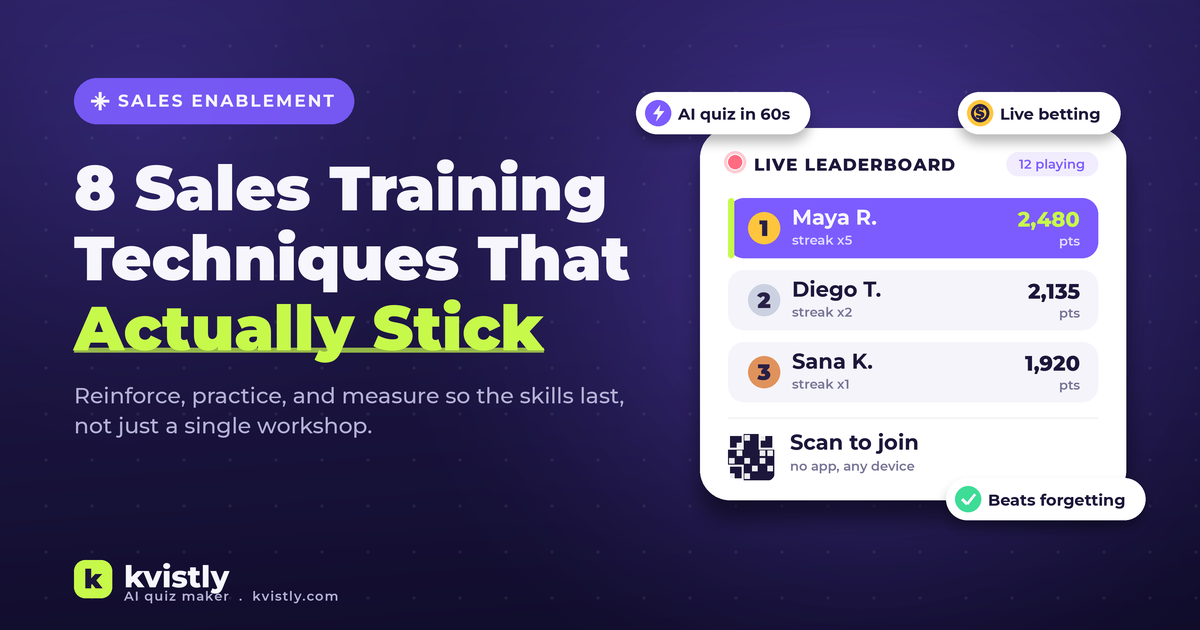
…your sales reps can stay active thanks to real-time risk-based bidding mechanics and competitive live leaderboards that turn raw specifications into an engaging challenge. 

Everyone can join the session instantly from a smartphone, tablet, or laptop by scanning a clear QR code or opening a shared link, completely removing the need for software downloads or complex account creations. 

After the game wraps up, you receive clear reports that show exact recall numbers and surface specific knowledge gaps for each individual rep on your team.

This interactive system has already proven its value for growing sales organizations out in the market. 

For instance, the distributor Danbel built a continuous, gamified sales-training culture with Kvistly to train their regional managers on expanding product lines, replacing boring text files with high-engagement review loops. 

Wanna see how you can set up a personalized environment for your commercial department? Head over to the Kvistly sales page or simply start for free right now to build your first recall session.

Frequently Asked Questions

What is sales effectiveness training?

This specific instruction path targets actual behavior modification and measurable team outputs rather than simple information sharing. It relies on continuous feedback loops, structured practice sessions, and active reinforcement to make sure new selling skills stick long-term.

What makes sales training effective?

Success comes down to consistent reinforcement, realistic pipeline application, and tracking clear execution changes over time. Programs succeed when they move past one-time presentations and build ongoing systems that stop reps from forgetting the material.

What are the most effective sales training techniques?

The highest-performing tactics include interactive learning blocks, live scenario role-playing, peer mentorship pairing, and structured weekly coaching. Adding microlearning and automated retrieval practice also helps busy reps absorb key details without pulling them away from daily client calls.

How do you measure sales training effectiveness?

You evaluate success by evaluating concrete metrics like post-training knowledge retention scores, documented habit changes on call recordings, and eventual pipeline changes. Tracking final numbers like faster new-hire ramp times or improved conversion rates gives you the clearest picture of your overall return on investment.

How often should sales teams be trained?

Core sales onboarding or new product updates require dedicated deep-dive sessions whenever major strategic changes happen across the company. For daily execution habits, your team should take part in quick, bite-sized reinforcement exercises every week to keep their core pitching skills completely sharp.

Can quizzes improve sales training retention?

Running rapid recall games prevents the natural drop-off in memory that typically happens right after a major company workshop wraps up. Forcing the brain to actively retrieve technical product details and objection answers makes the information immediately accessible during live buyer negotiations.

Elena Zangeeva
Kvistly's Co-founder & CEO Elena brings over 12 years of HR expertise from her tenure at BCG, Bumble, and Sweatcoin