
The best language learning app for school is the one that drives real classroom engagement. That’s why Kvistly stands out.
Most language apps were built for solo learners tapping through drills at home. Classrooms are different. Teachers need participation, energy, and measurable progress. Students need motivation, interaction, and a reason to care. Flashcards and passive repetition do not deliver that in a room full of teenagers watching the clock.
In this article, we’ll review the top 5 language learning apps for school settings. At the top of the list is Kvistly, a modern alternative to passive learning that transforms vocabulary drills into live quiz battles, leaderboards, and betting rounds that keep students locked in. We’ll also compare it to other tools like Kahoot, Duolingo, Babbel, and more.
Research shows that over 1.5 billion people are learning a foreign language. Most of them get help from a language learning app or use one exclusively.
What makes for a good one?
Traditional language apps rely on drills. Tap the right answer. Move to the next card. Repeat until your brain shuts off.
That might work for motivated solo learners, but it fails in classrooms where half the students are checking the clock every 2 minutes.
Schools need active participation, not silent tapping. The best language-learning app for schools energises the classroom. It motivates students to compete, respond, and care about getting the answer right.
When learning feels like a game instead of homework, retention skyrockets.
Leaderboards change everything. So does live betting. When students see their name climbing up the board or watch their classmates place bets on answers, motivation multiplies.
Everyone pays attention.
Team play adds another layer. Students shift their focus from themselves to collaborating with their group. They're not just learning Spanish verbs. They're working together to dominate the leaderboard. That kind of peer pressure, when directed positively, is exactly what classrooms need.
Most language learning apps assume you have 30 minutes to burn. Teachers don't. Class time is tight, and every minute counts.
The best microlearning apps break content into short, interactive rounds that fit within 10- to 15-minute segments. That's perfect for language classes. For example, teachers can run a quick Kvistly battle at the start of class to review yesterday's vocabulary, or end the period with a live quiz that reinforces the day's grammar lesson.
No wasted time. No awkward transitions. Just fast, focused learning that fits the schedule.
Teachers need visibility. They need to know who's mastering the material and who's falling behind. They need data on accuracy rates, vocabulary retention, and participation levels.
The best language-learning apps give you control over content and access to real-time analytics. That means:
Most language learning apps are designed for solo learners working at home. Very few are built for classrooms. Here's how the top options stack up in actual school use.
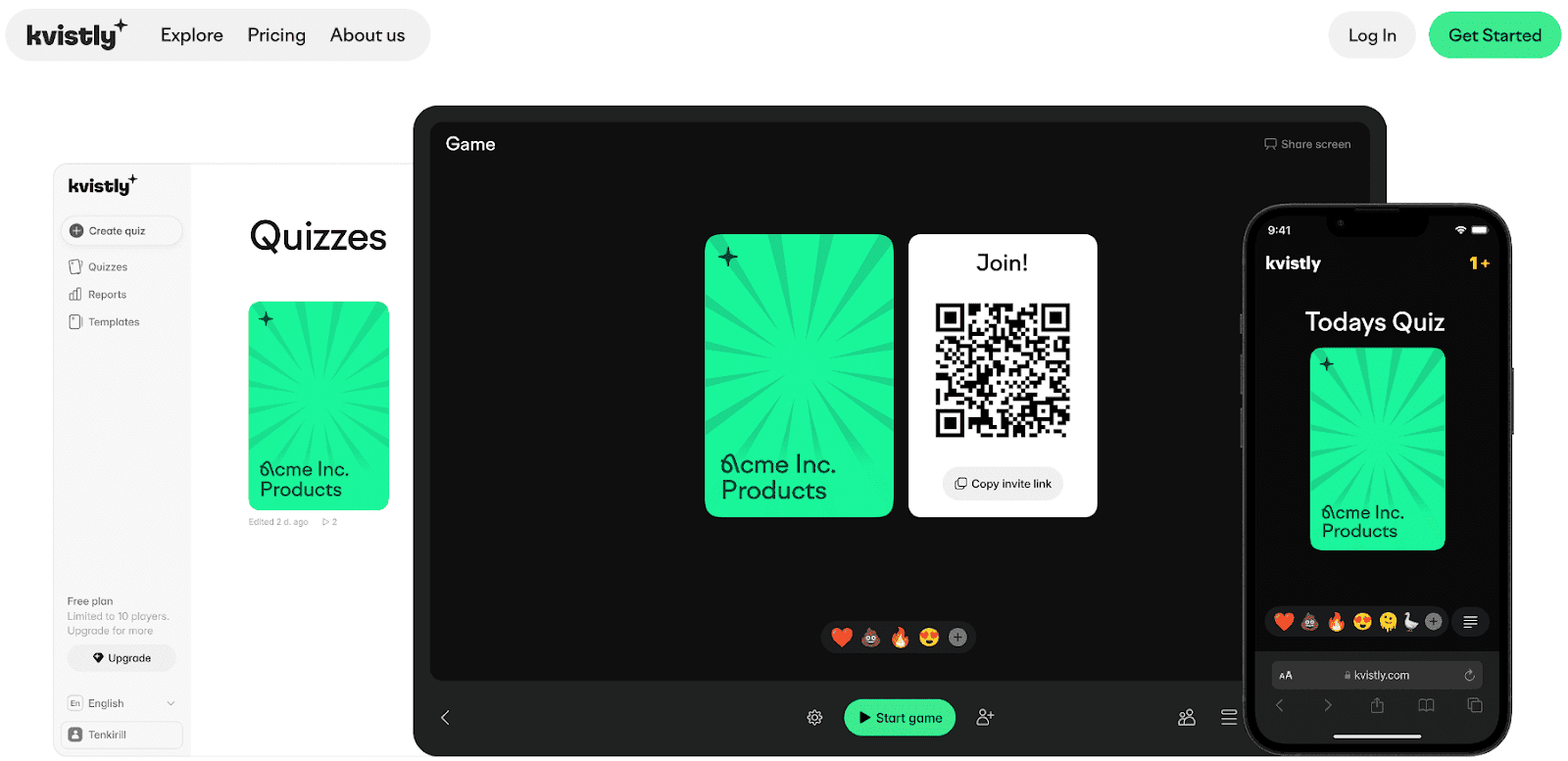
Kvistly is the best language learning app for schools because it is built for group learning, not isolated drills. It turns vocabulary practice and grammar review into competitive play that students actually want to participate in. This makes it a fantastic Kahoot alternative, but tailored for schools.
If you're looking for the best app to learn Spanish in school, Kvistly turns vocabulary practice into competitive play instead of repetitive flashcards. The same goes for French, German, Japanese, or any other language. Students aren't passively reviewing. Instead, they're battling for the top spot while actually retaining what they learn.
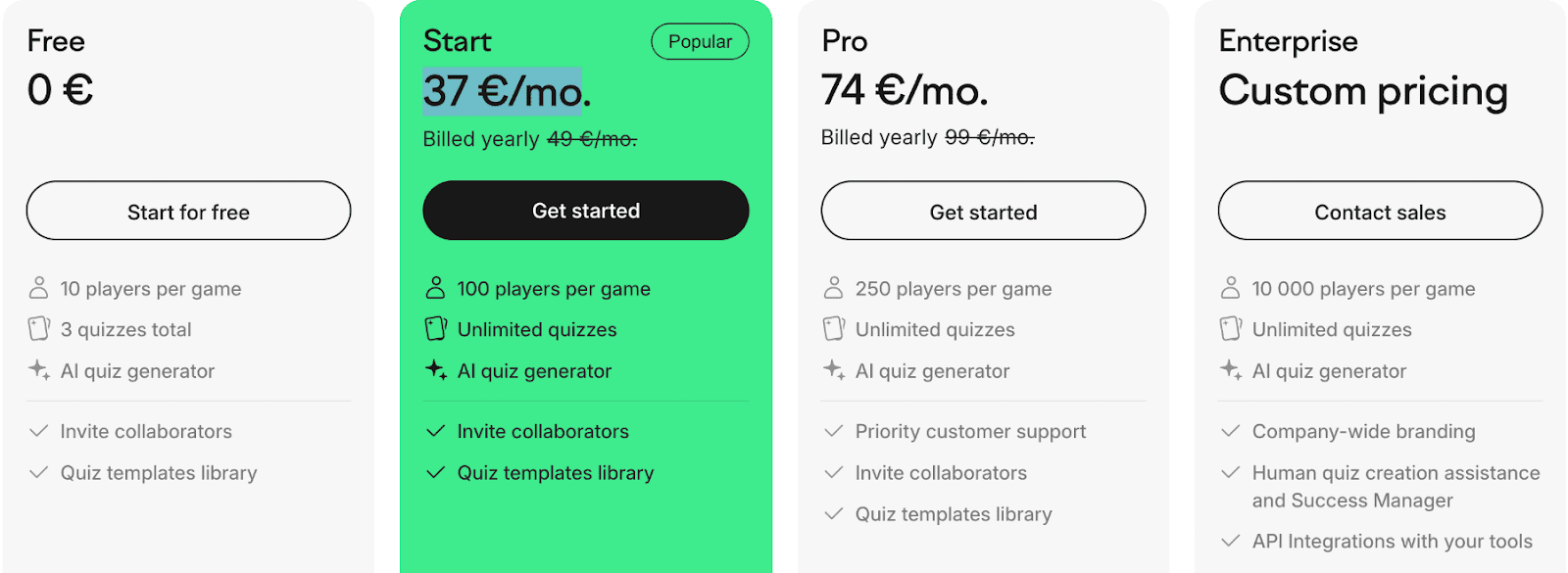
Kvistly offers a very generous free plan with 10 players per game, 3 quizzes, and an AI quiz generator. Paid plans start at 37 €/month.
Kvistly also offers a special, 100% free access to all public school teachers worldwide.
With Kvistly, you can customize quiz content, track student performance, and run live sessions to fit your exact lesson plans. It's flexible, fast, and designed specifically for classroom energy.
Duolingo is a great language learning app for individual learners. The gamification works well, and the free version gives students access to tons of content. But in the classroom, it falls flat.
There's no competitive classroom structure. Students work through lessons at their own pace, which sounds good in theory but creates a disconnected experience in practice. Half the class is on lesson three while the other half is on lesson ten.
Teachers have limited control over what students practice, and there's no real way to run a group activity that keeps everyone engaged simultaneously.
While Duolingo is great for homework, it doesn't work well for class time.
Pricing: Paid plans start at $6.99/month for individuals or $119.99/year for families (up to 6 users).
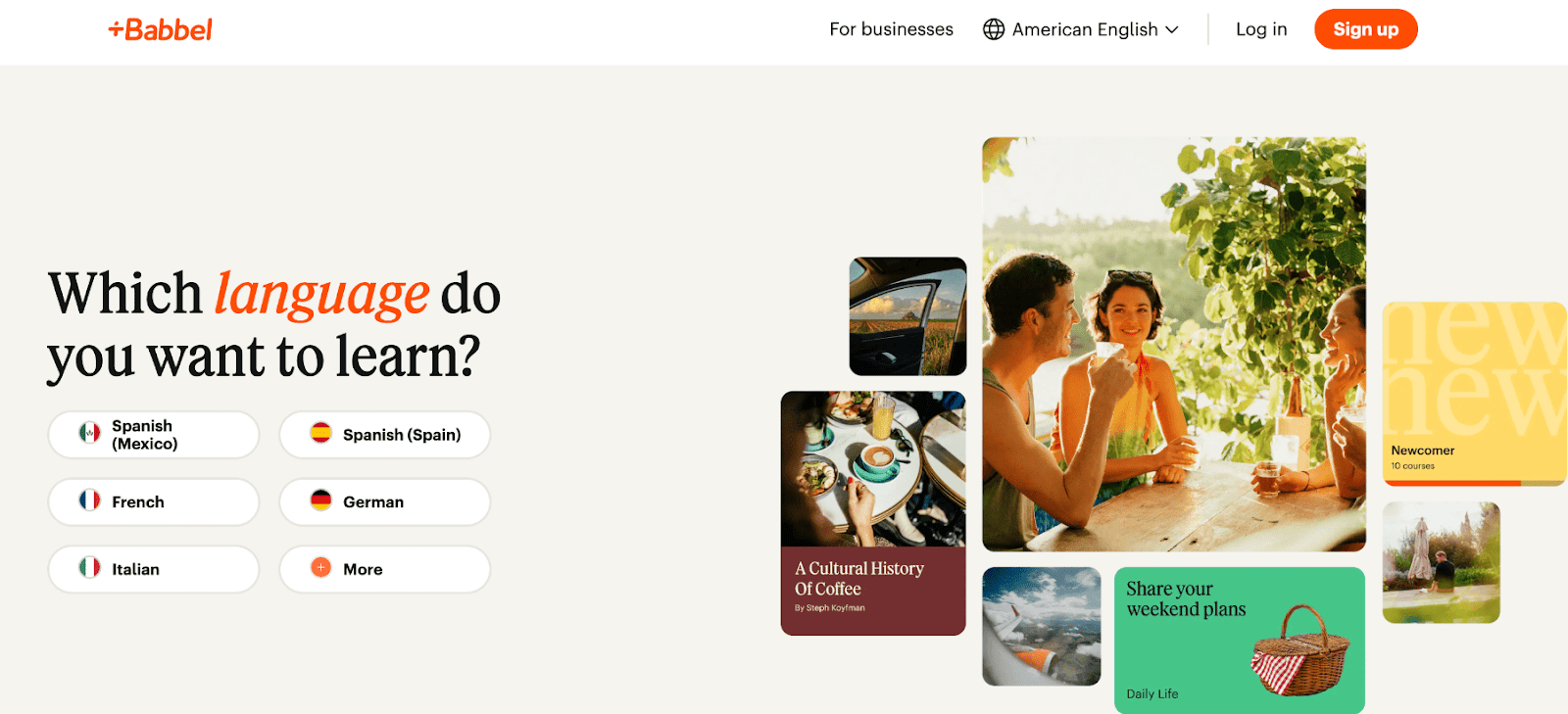
Babbel offers well-structured lessons focused on conversation skills. The content quality is solid, especially for adult learners who want a methodical approach.
But for schools, Babbel has 2 big problems. First, limited free access. Most features require a paid subscription, making it difficult for budget-conscious schools. Second, it's less interactive. Students work through lessons individually, which reduces classroom energy and limits opportunities for group learning.
Babbel is a good choice for serious self-study. But it's not built for the chaos and collaboration of a classroom.
Pricing: Paid plans start at $8.95/month.
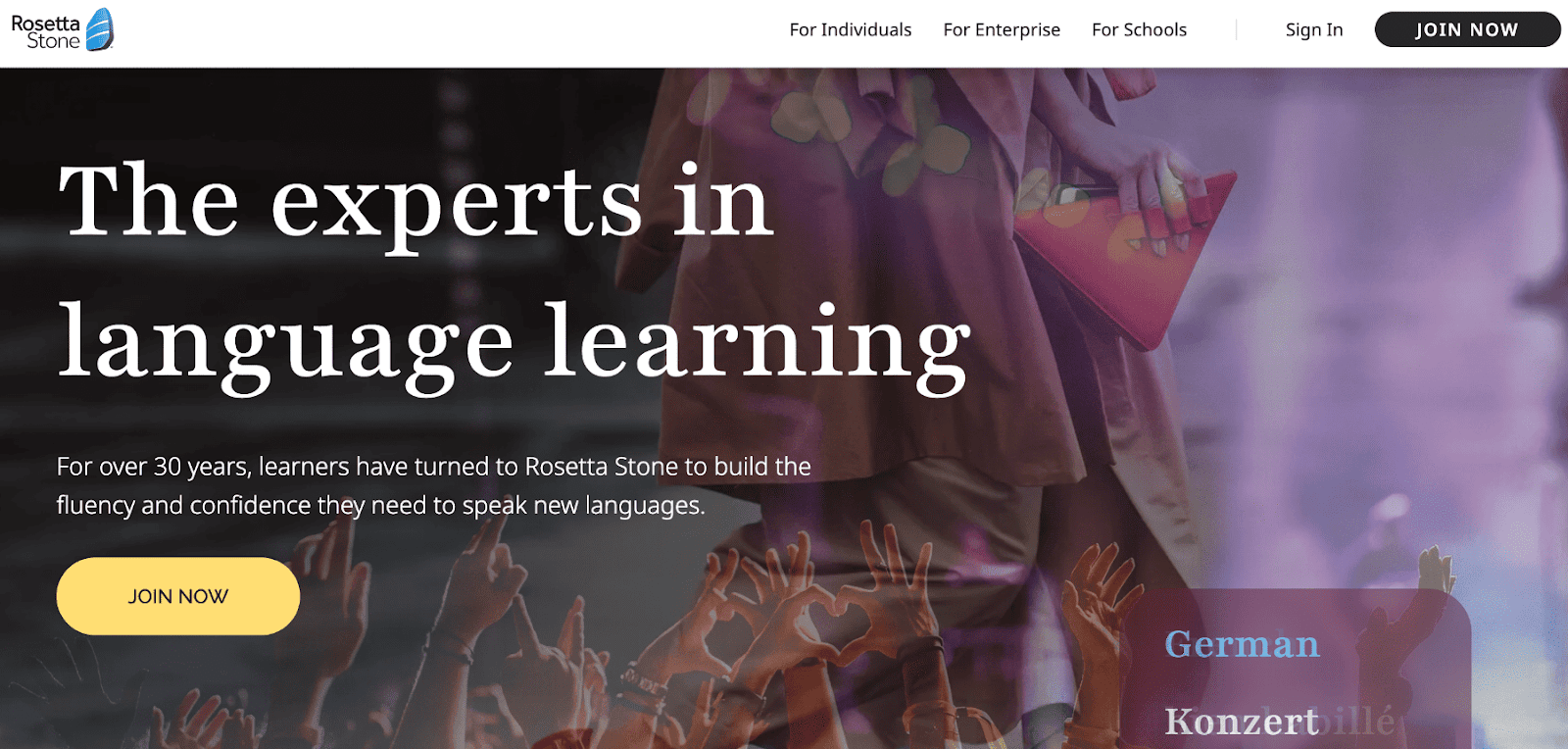
Rosetta Stone has a genuine school offering. It supports 25 languages, integrates with platforms such as Clever, Canvas, and Blackboard, and provides teachers with detailed reporting tools to track how students progress through the curriculum.
The core method is full immersion. No English instructions. No translations. Students learn through images, audio from native speakers, and real-world context. That said, immersion without interaction only goes so far.
Rosetta Stone is a self-paced platform. Students progress through structured lessons independently, so there's no competitive element and no way to run a live group activity. It's built for individual progress, not classroom energy. If your goal is to get an entire class engaged simultaneously, the platform won't drive the level of participation that teachers need.
Pricing: Custom pricing for schools. Contact Rosetta Stone directly for a quote.
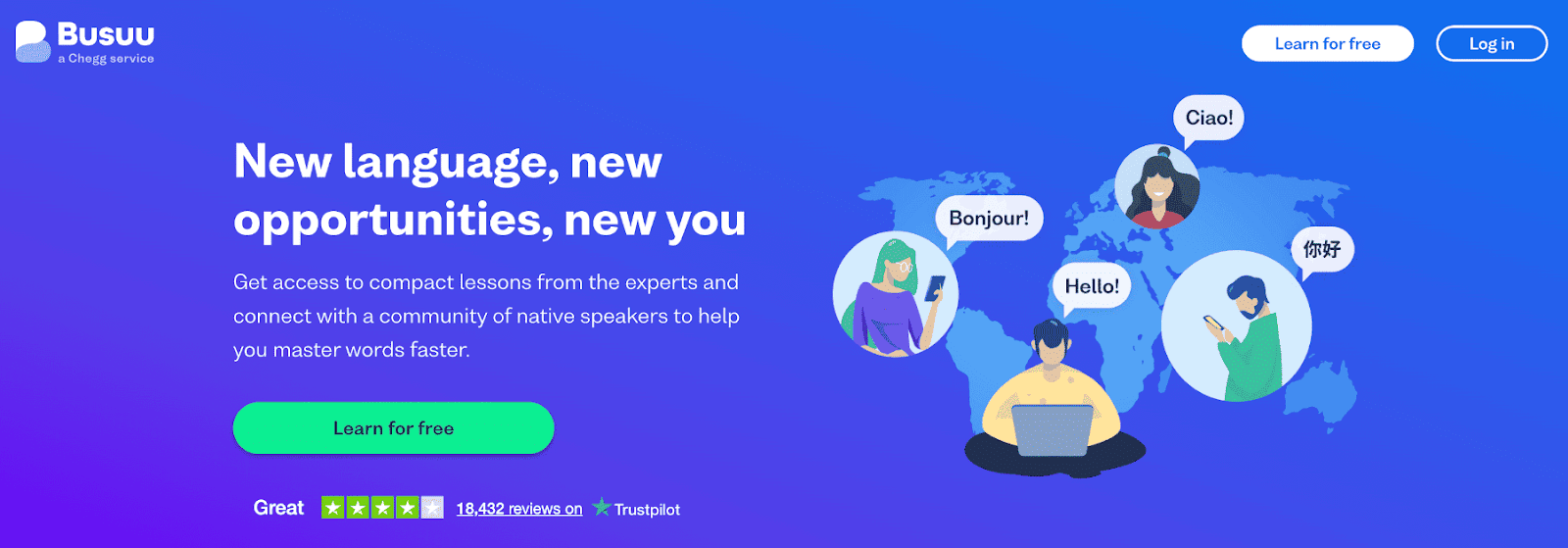
Busuu combines lessons with community feedback. Students can submit written or spoken exercises and get corrections from native speakers. That's a cool feature for self-paced learners who want real-world interaction.
But for classrooms, it's more self-paced than classroom-oriented. Teachers don't have the same level of control, and there's no built-in competitive structure. It's a decent supplemental tool, but it's not replacing your main teaching method.
Pricing: Paid plans start at $6,08/month.
Spanish is one of the most useful languages to learn globally, and schools across the country prioritize it in their language programs.
But here's the thing: not all Spanish learning apps work in classrooms. Apps built for solo learners don't create the kind of engagement teachers need. Students zone out. Participation drops. Retention suffers.
For classrooms, engagement beats passive repetition.
That's why Kvistly is the best Spanish learning app for school use. It transforms Spanish vocabulary drills into live battles where students compete, collaborate, and actually care about getting the answer right.
Whether you're searching for the best free Spanish learning app or the best app for learning Spanish in a school setting, the answer comes down to one question: Does it work in a classroom?
Kvistly does.
Teachers can run live Spanish quizzes that cover vocabulary, verb conjugations, sentence structure, and more. Students see their progress on leaderboards, and work in teams to climb the rankings.
If you want to know how to learn a language fast, the research is clear. Passive reading and mindless repetition don't cut it. The fastest way to learn a language involves four key strategies:
Kvistly's competitive format aligns with all 4 strategies.
If you're asking what the best way to learn a language in school is, the answer is simple: use an app that combines competition, repetition, and time pressure into short, engaging sessions.
Microlearning apps improve retention by breaking content into small, focused chunks. Instead of overwhelming students with hour-long lessons, microlearning delivers quick bursts of practice that sustain attention and keep memory sharp.
Research shows that shorter, more frequent learning sessions lead to better long-term retention than longer, less frequent sessions. That's why the best microlearning apps are built around 5 to 15-minute activities that students can complete in one sitting.
For language classes, microlearning is a perfect fit. Teachers can run a quick vocabulary battle at the start of class, a grammar quiz in the middle, or a review round at the end. Each session reinforces the day's lesson without eating up too much time.
Kvistly is one of the best microlearning apps for education because it was designed specifically for short, high-energy sessions.
Teachers don't need to commit an entire class period to the app. You can drop in a 10-minute quiz whenever they need to reinforce content, boost energy, or review material before a test.
Ready to see the Kvistly difference?
Start a free classroom session here.
Kvistly is ideal for classroom Spanish learning because it uses competitive quizzes, leaderboards, and live interaction instead of passive drills. Students practice vocabulary and grammar through quiz battles that create energy and participation. For solo learners at home, apps like Duolingo offer strong free options.
For individual learners, Duolingo is popular and offers a solid free version with tons of content. For schools looking for engagement and classroom interaction, Kvistly offers free classroom sessions that turn language practice into competitive play. The best choice depends on whether you're learning solo or in a group.
Use active recall, daily practice, and interactive competition to increase retention. Apps that quiz you repeatedly, create time pressure, and involve real-time interaction help you learn faster than passive reading or mindless flashcards. Consistent microlearning sessions of 10 to 15 minutes per day outperform long, occasional study marathons.
Spanish, French, German, and Japanese are among the most useful languages to learn globally, depending on your career goals and region. Spanish is valuable across the Americas and Spain. French opens doors in Europe, Africa, and Canada. German is strong for business and engineering. Japanese is useful for tech and international trade in Asia.
Yes, if they are interactive. Apps that encourage participation, competition, and repetition outperform passive reading tools. The best language learning apps for school create engagement through leaderboards, live quizzes, and team play. Apps built for solo learners at home often fail to create classroom energy.