

The best Mentimeter alternatives in 2026 are Kvistly for quiz-driven sessions with real analytics, Slido for large-scale Q&A, Kahoot for competitive formats, Wooclap for education-focused interaction, and AhaSlides for a simpler, lower-cost alternative. The right choice depends on whether you need participation, structure, or scale.
Most tools like Mentimeter are good at collecting responses. They're not great at getting people to actually participate.
You run a poll, a few people click in, and the rest of the room checks out.
Gallup’s 2025 State of the Global Workforce Report found that only 21% of employees are actively engaged at work globally. If you’re running a training session, class, or a team meeting, that’s the real problem you’re trying to solve.
Mentimeter still works fine for basic polling. But once you want something more interactive, you start to feel the limits. Participant caps, shallow quiz formats, and no way to track how individuals are actually doing.
That’s where alternatives come in. Some tools are built for live Q&A during large presentations. Others focus on competitive quizzes or structured learning. The difference shows up pretty quickly once you run a real session.
In this guide, we’ve broken down five Mentimeter alternatives that are actually worth trying in 2026, along with where each one works well and where it doesn’t.
Before jumping into the full breakdowns, here's a quick look at how each tool was evaluated.
We tested each tool by running live sessions across three different use cases: a corporate training knowledge check, a classroom-style lesson review, and a team meeting warm-up.
For each tool, we looked at how easy setup was from scratch, how participants actually responded during the session, and what kind of data was available afterward.
We also reviewed pricing structures, free plan limits, and the quality of AI features. Tools were scored on engagement quality, not just feature lists. A long list of question types doesn’t matter much if people disengage after the first two minutes.
With that context in mind, here’s how each tool actually performed.
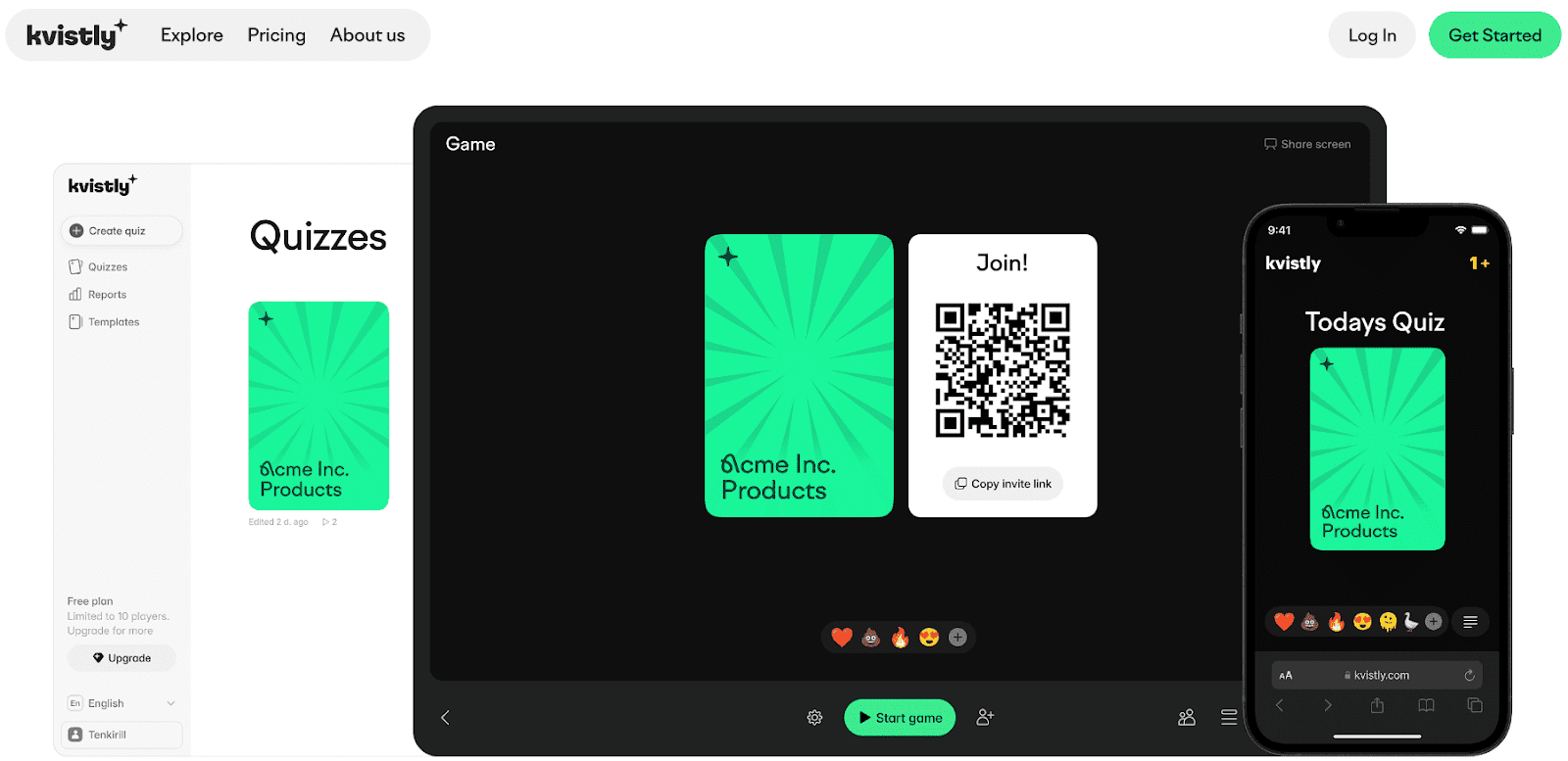
If Mentimeter feels too passive for what you need, Kvistly is worth a serious look. It's built for live quiz engagement rather than polling. Participants answer questions, stake a confidence score, and compete on a live leaderboard .
The AI quiz generator is the standout feature. Type in a topic, paste your notes, or upload a document and Kvistly produces a full quiz in seconds. In our testing, generating a 10-question knowledge check from a pasted training document took about 40 seconds. The final output needed almost no editing.
How to Run Your First Kvistly Quiz — 3-Minute Tutorial
After each session, you get per-participant analytics showing exactly who struggled with which questions. That level of post-session data isn’t available on Mentimeter’s free plan at all.
Training sessions, interactive meetings, classrooms, and team workshops.
Paid Plan starts at €37/month. Public schools get Kvistly free.
Mentimeter is designed for passive audience interaction. Kvistly is the better choice when you want active participation, competition, and measurable outcomes.
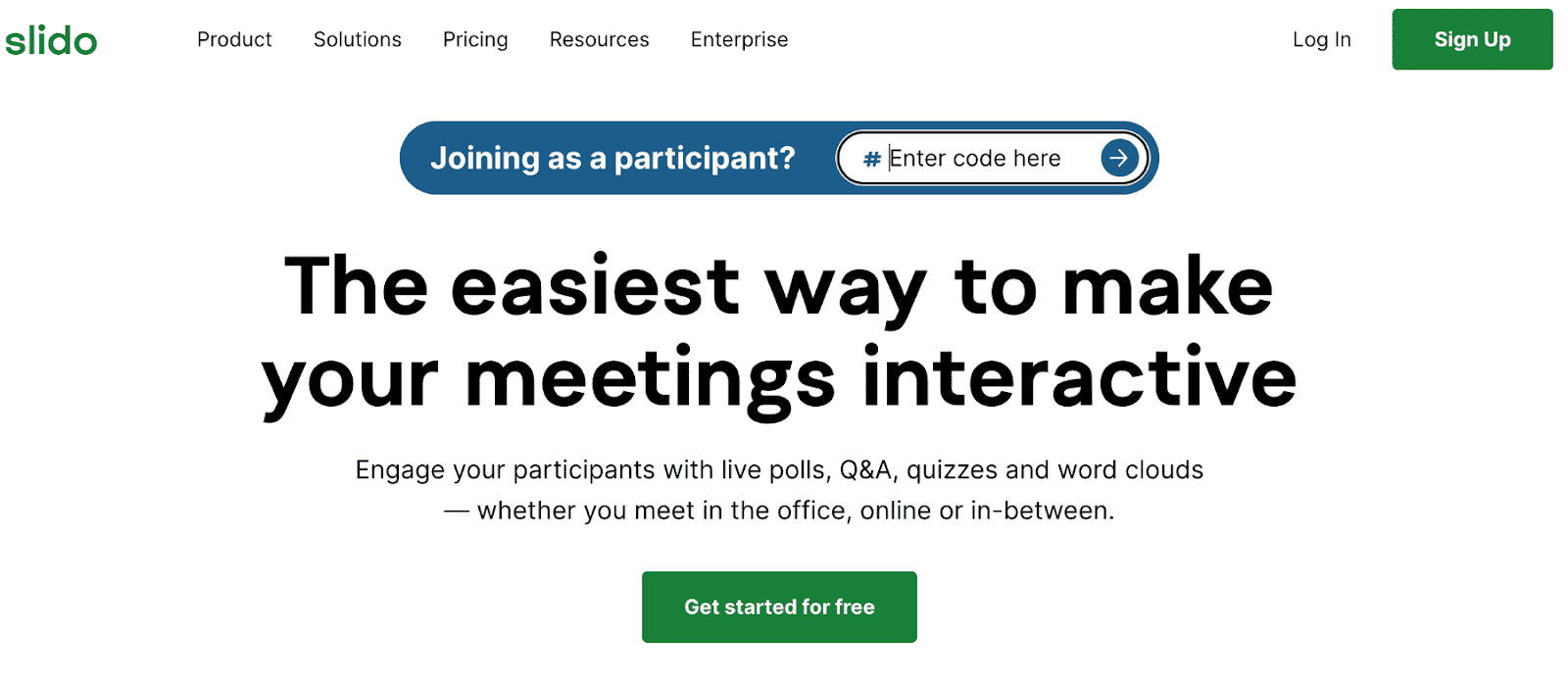
Slido is purpose-built for large presentations and conference settings where Q&A and polling need to run alongside slides without disrupting the flow. Audience members submit questions through a simple link, upvote the ones they want answered, and respond to live polls. Presenters moderate from a separate view.
It connects directly with PowerPoint and Google Slides, which is genuinely useful. You can embed polls inside your deck rather than switching between windows mid-presentation.
It falls short when you need people to actually feel the energy of a quiz. It’s also pretty restrictive on the free plan for participant numbers and monthly polls. For corporate settings with a big, professional audience though, few tools match it.
Conferences, corporate presentations, large town halls, and webinars.
Free plan with limited polls per month. Paid plans start at $12.50/month.
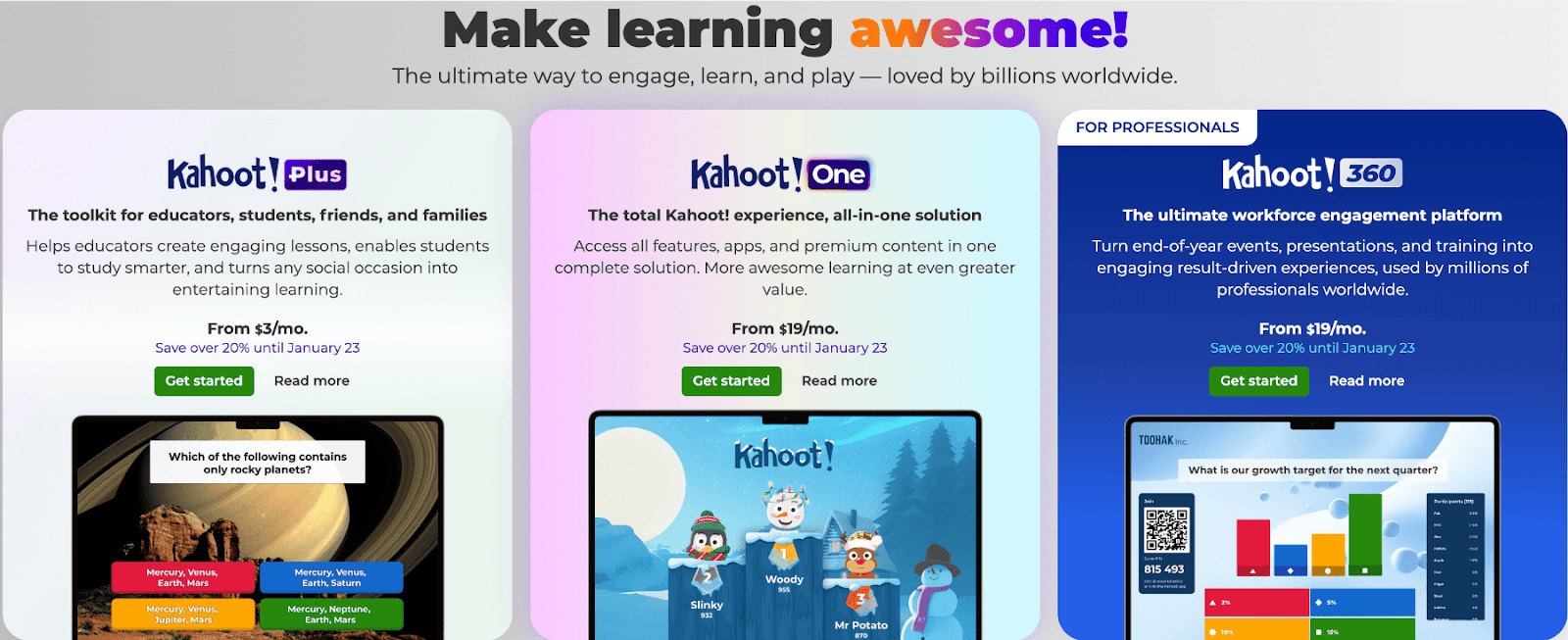
Kahoot needs little introduction. Participants join with a game code, answer multiple-choice questions against a timer, and score points based on speed and accuracy. The leaderboard updates after every question.
It’s fast, familiar, and participants respond to it almost immediately as there’s no learning curve. The pre-made quiz library across hundreds of topics is genuinely useful if you're short on prep time.
The limits are real though. The free plan caps sessions at 10 participants, which makes it difficult to use in any real team setting without paying. And there's no open-ended questions, word clouds, or slide integration. If you need more than competitive multiple choice, you'll hit a wall quickly.
Classrooms, virtual events, team-building, corporate training.
Free plan limited to 10 participants per game. Paid plans start at $19/month.
Check out similar tools in our guide to the best Kahoot alternatives.
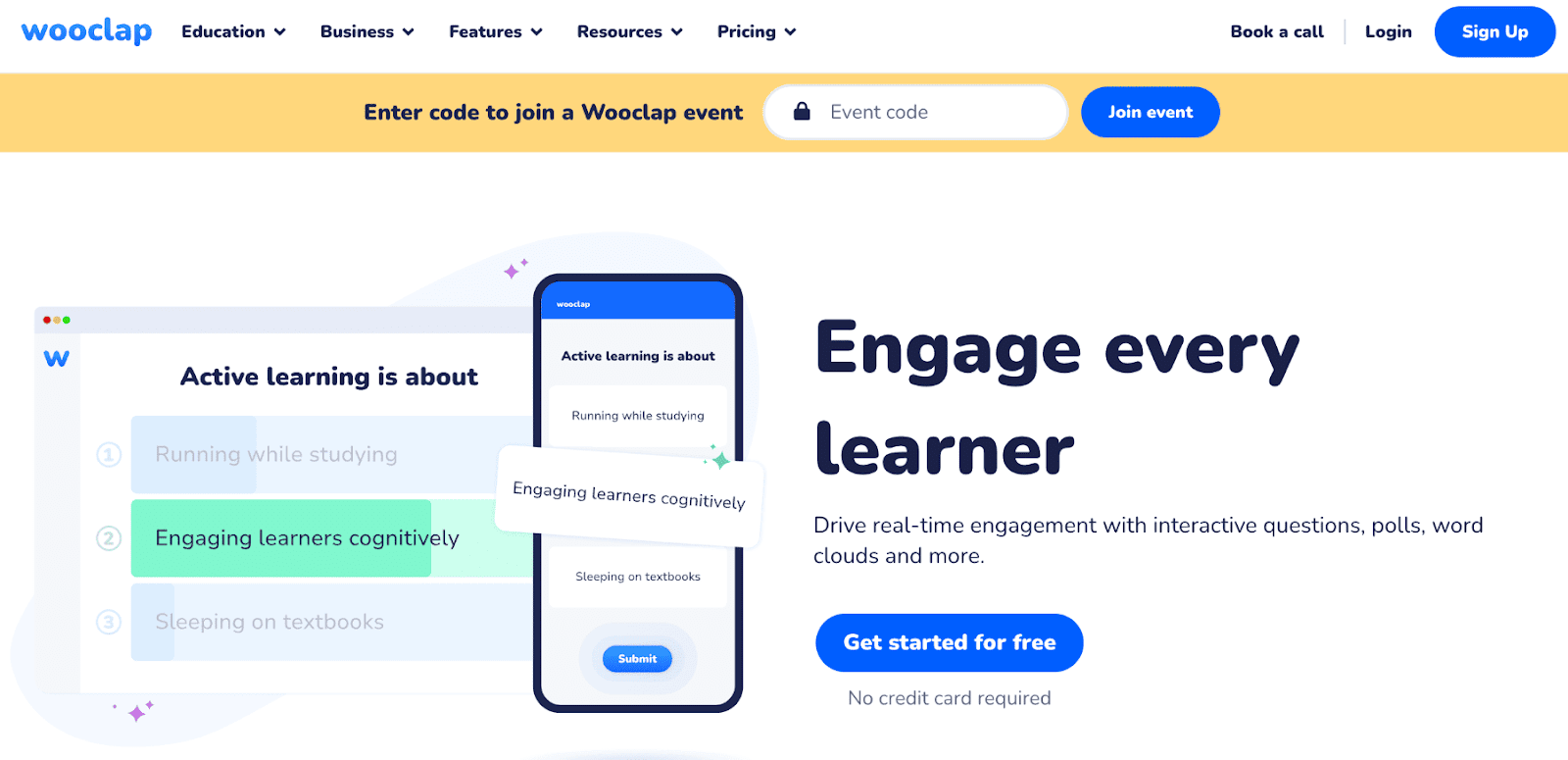
Wooclap is built for educators. It's one of the more thoughtful tools in this space for anyone running lectures, seminars, or university-level teaching.
Like Mentimeter, you can embed interactive questions into presentations. Wooclap goes further with brainstorming tools, matching activities, and open-ended question types designed to prompt genuine discussion rather than just collect clicks. It also tracks learning outcomes over time, which matters for instructors who want evidence of comprehension, not just participation rates.
The interface can feel a bit dense compared to simpler tools. It took us a few minutes to get comfortable with the session setup. But once you're in, the question variety is noticeably better than Mentimeter at similar price points.
Universities, schools, lectures, seminars, and educational workshops.
Paid plan starts at $10.99/month.
AhaSlides sits closest to Mentimeter in terms of what it actually does. It combines presentation slides with live audience interaction including polls, quizzes, word clouds, rating scales, and Q&A.
The main difference is the free plan. AhaSlides is noticeably more generous than Mentimeter without requiring a paid upgrade. The interface is cleaner and more beginner-friendly than many alternatives at this price point, and the upgrade cost is friendlier too.
The competition mode is less polished than Kahoot or Kvistly, and the analytics are lighter. But if you're looking for a like-for-like Mentimeter replacement that costs less and has a more accessible free tier, AhaSlides is hard to argue with.
Workshops, training sessions, internal presentations, and public talks.
Paid plans start at $23.95/month.
Mentimeter is a solid tool. It holds a 4.7/5 rating across 600+ reviews on G2, which says a lot about how reliable it is for basic use cases.
But once you start using it regularly, the gaps become harder to ignore.
The first one most people run into is the participant limit. The free plan caps active responses pretty quickly, which is fine for small groups but starts breaking down in larger sessions.
Then there’s the quiz side of things. If you’re trying to run something interactive or competitive, it feels limited. You can ask questions, but you don’t really get the kind of engagement you see with quiz-first tools.
Pricing is another factor. As soon as you need more flexibility, whether that’s more participants or more questions per presentation, you’re pushed into a paid plan. And the annual billing doesn’t always sit well with teams that just want to test things out.
The bigger limitation, especially for training or education, is the lack of visibility into individual performance. You can see overall responses, but not how each person is doing. That makes it harder to use Mentimeter for anything beyond surface-level interaction.
If you’ve run into even one of these, you’ve probably already started looking for alternatives. At that point, the decision usually comes down to the kind of sessions you’re running and how much participation you actually want to drive.
The right tool depends on the kind of interaction you're actually trying to create.
Go with Kvistly or Kahoot. Both are built around real-time competition and are more engaging for this use case than any polling tool. Kvistly is the better pick if you also need AI-generated content and post-session analytics.
Slido is purpose-built for this. It's the cleanest option for formal settings with big audiences and integrates directly with your slides.
Wooclap is specifically designed for education and has more pedagogically-focused features than anything else on this list. Kvistly is also a strong option for testing whether students have grasped the material, and it's free for public school teachers worldwide.
AhaSlides covers the same feature set with a more accessible free plan and a friendlier upgrade price. Once you’ve narrowed it down by use case, pricing is usually the next important question.
With pricing on the table, here’s the bottom line on which tool actually wins for each use case.
Mentimeter does passive audience interaction well. But it's not the right fit for every use case, and the gaps are meaningful once you need more from your sessions.
For quiz-driven sessions with AI content generation and real tracking data, Kvistly is the strongest alternative right now. For Q&A-heavy presentations, Slido is the clear leader. For competitive classroom energy, Kahoot is the proven choice. For education-focused interaction, Wooclap is purpose-built. And for a free, all-in-one presentation tool that mirrors Mentimeter's feature set, AhaSlides is hard to argue with.
Want a side-by-side breakdown? Check out our Mentimeter vs Kahoot vs Kvistly comparison.