

A team offsite is an event held outside the standard workplace, bringing colleagues together to connect, build trust, and recharge in a relaxed setting. Great offsite team building comes down to choosing fun, well-paced activities that get everyone participating naturally without forcing awkward interactions.
But these events can get messy real fast, especially if it’s your first time organizing one.
I put together this guide to share practical team offsite ideas alongside a clear plan to execute them smoothly with actionable offsite team building activities for in-person, remote, and hybrid teams.
Here is how you can set up an event your team actually looks forward to.

When you look at what a team offsite actually is, it comes down to getting your group out of the office to reset and spend real time together. You can keep it to a simple half-day event or pack your bags for a multi-day trip.
It helps to see how this differs from other work events. Weekly meetings focus on immediate tasks and project updates. Corporate retreats lean heavily on open-ended vacation time. A good offsite gives you a healthy mix of shared strategy and structured offsite team building, so everyone comes back feeling connected and on the same page.
To pick the right fit, focus on your primary goal, team size, and location format. Most lists skip this part and throw random events at you, which leads to forced activities people secretly dislike.
Social goals work best with casual trivia or quick team games. Strategic goals need structured workshops. Large groups need simple rules and zero friction, while small teams handle hands-on projects well. Remote and hybrid teams need straightforward digital tools so no one gets left out.
Here’s a quick breakdown mapping goals directly to activity types:
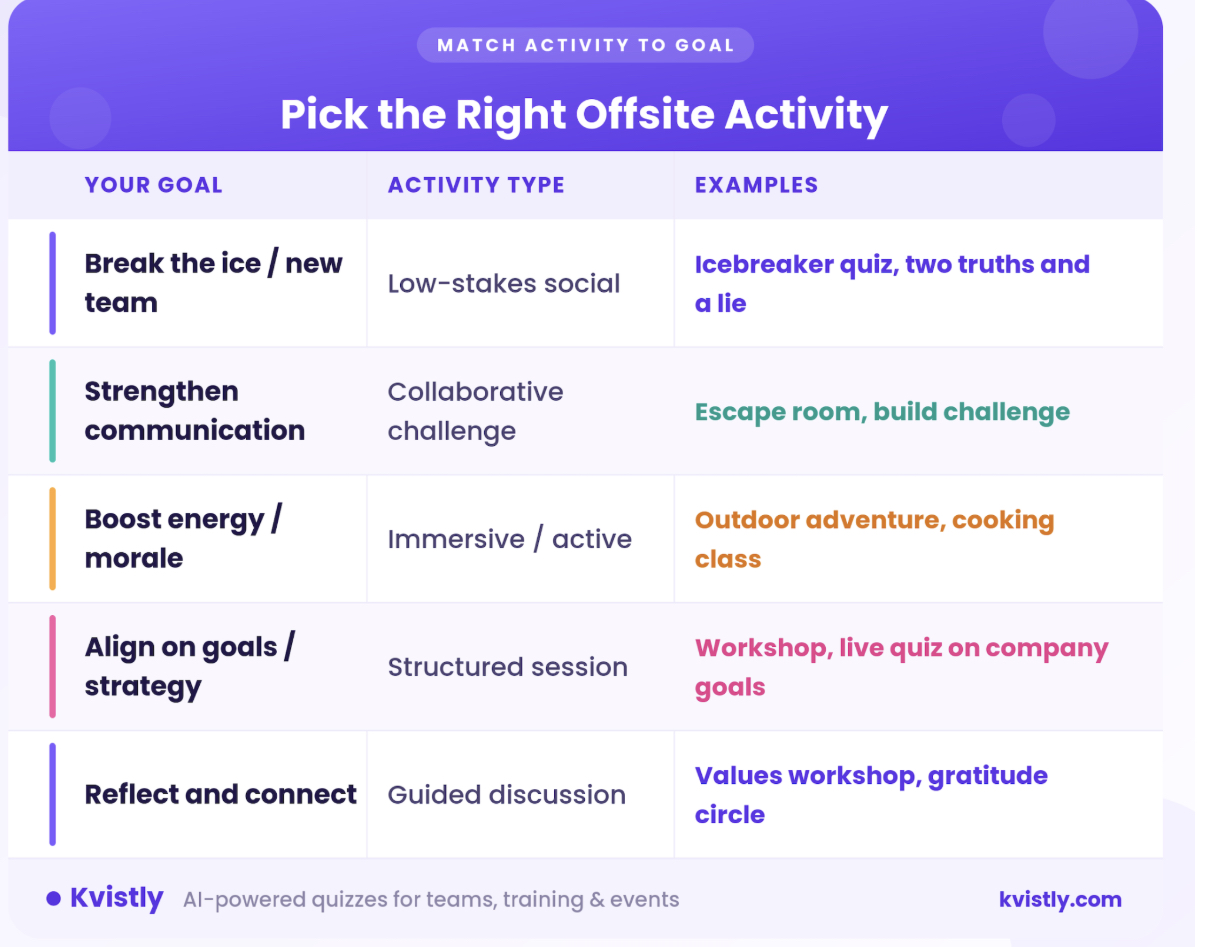
I broke these 24 activities into six categories so you can jump straight to what fits your timeline and venue.

1. Live Icebreaker Quiz
You kick off the day by having everyone pull out their phones and answer quick trivia rounds about their teammates. It strips away early event stiffness right out of the gate. Quiz and team building app Kvistly works well for this slot.
Its AI turns company milestones or personal fun facts into a finished quiz in minutes. Scores update live on screen, and people join instantly with a join code from anywhere, in person or online.
2. Two Truths and a Lie
Coworkers write down two real facts and one fake claim about their life, then let the room guess which statement is false. You end up learning surprising personal stories without spending a dime.
3. This-or-That Polls
Participants vote on simple choices like early mornings or late nights, or hot coffee or iced tea. Quiet team members get to participate right away without feeling put on the spot. You can drop these polls straight into Zoom chat or Slack.
4. Speed Geeking
People pair up for quick two-minute chats to teach each other a niche skill or talk about a personal hobby before rotating. The rapid swaps force fast individual connections. It fits co-located teams running on tight schedules.
5. Escape Room
Lock your team in a themed space where they have sixty minutes to find hidden clues and solve puzzles together. The timer forces fast communication and natural delegation. Local escape rooms handle physical groups, while virtual escape rooms give remote teams the exact same challenge over video calls.
6. Build Challenge
Hand each table a stack of cardboard, tape, and newspapers, then tell them to build a bridge that holds weight. Working with raw materials gets people testing ideas immediately. It gives local teams a fun physical challenge.
7. Photo Scavenger Hunt
Send small groups out around the venue or town to track down specific items and take funny group photos. It gets everyone moving after sitting through morning presentations. In-person crews walk the area together, while hybrid groups post their pictures directly to a group chat channel.
8. Mini-Innovation Challenge
Put cross-functional teams together for two hours to draft a pitch for a new product feature or fix a broken internal process. You walk away with real business ideas while reps practice pitching together. Remote and hybrid groups can do all the work on shared whiteboards.

9. Group Cooking Class
A chef walks the group through prepping a multi-course meal that everyone sits down to eat together. Prepping ingredients side by side keeps conversation completely informal. Book a local kitchen for in-person teams, or mail ingredient boxes to remote staff for a video cooking session.
10. Guided Art Session
An instructor guides the room step by step as people paint canvas art or model clay objects. Focusing on a creative task gives everyone a clean mental break from work topics. Set up easels at your physical venue, or ship supply kits to remote staff beforehand.
11. Business Storytelling Workshop
A facilitator teaches your team how to format clear stories, then gives everyone time to practice sharing short career experiences aloud. It sharpens communication skills and helps people understand each other on a deeper level.
12. Mixology Masterclass
A bartender shows your team how to balance flavors and mix custom cocktails or mocktails from scratch. The setting feels like a real night out after work. Reserve space at a local venue, or mail drink kits to virtual participants before jumping on a live stream.

13. Guided Nature Hike
Gather your group at a local trail head for a guided walk through scenic spots. Walking side by side leads to natural conversations between people who rarely cross paths at work. It works well for local teams that want a low-intensity outdoor activity.
14. Outdoor Adventure Course
Coworkers put on safety harnesses to tackle high ropes, footbridges, and zip lines together. Working through obstacles off the ground builds real trust between teammates.
15. Park Lawn Games
Set up cornhole boards, bocce ball sets, and ladder toss targets across a park lawn. People can play games or sit on blankets and talk whenever they want. It gives in-person teams a totally flexible afternoon outdoors.
16. Kayaking or Paddleboarding
Rent watercraft and lead your team along a calm river or lake route with a guide. Two-person kayaks require partners to sync their paddling movements to stay straight.
Reflective and connection
17. Company Values Workshop
Split people into small groups to review core company values and discuss how those ideas show up in daily routines. You get actionable feedback on real workplace habits instead of abstract slogans. Run this in person or use virtual breakout rooms for hybrid setups.
18. Gratitude Circle
Teammates take turns thanking specific coworkers for recent help or calling out strengths they admire in each other. Hearing direct praise boosts morale fast. It costs nothing and works in a conference room or on a Zoom grid.
19. Lifeline Mapping
Each person draws a simple timeline of major life or career milestones and walks a small group through the key events. Sharing those personal details builds deep empathy between teammates. It suits small, tight-knit teams meeting in person or online.
20. Future Headline Exercise
Ask small groups to write mock news stories about what the company accomplished three years from today. The task gets everyone aligned on long-term targets without getting stuck in daily metrics. It runs smoothly for local, hybrid, or fully remote crews.
21. Live Quiz Competition
Split the room into competing teams to answer fast trivia rounds on pop culture, general knowledge, or company history. The competition gets everyone shouting out answers together. Kvistly is built for this exact setup.
You can plug in guess-the-number questions or company facts, and the software handles score tracking and live leaderboards while participants play on their phones using a join code.
22. Corporate Game Show
Hire a host to run workplace-friendly versions of classic TV game shows for the whole company. The fast pace keeps energy high and gets the room cheering. It works for large physical crowds or full-company video streams.
23. Board Game Tournament
Set up tables with quick tabletop games and rotate players every twenty minutes to face new opponents. Having clear rules makes socializing effortless for people who prefer structured activities over casual networking. It gives in-person teams a low-key evening option.
24. Mystery Night
Hand out secret character profiles with hidden clues so your team can spend the evening solving a fake crime. Playing hidden roles encourages hilarious banter and acting. Host this over dinner for local groups or run it digitally over video calls.

Sitting through hours of slides on Zoom kills the mood fast. If you're running a remote offsite, focus on easy, low-tech games where everyone plays at once.
Five quick ideas that work:

You want a great day out, but nobody wants to spend three weeks wrestling with venue contacts and broken spreadsheets.
Here’s how to get it done cleanly.
Start by picking one main outcome. You might want to map out next year's department goals, give a tired crew a genuine break, or help new hires get to know everyone. Pick one priority and stay committed to it. Trying to handle all three at once leaves your team exhausted by noon.
Lock down your numbers before looking at venues. Calculate costs per person right away, including the meeting space, catering, transport, and planned activities. Getting finance approval upfront saves you hours of wasted effort on places you cannot book.
Your team structure dictates how you gather. Local groups benefit from renting a space twenty minutes down the road so people stay focused on the day. Remote teams skip travel entirely by using a video conferencing app along with a good quiz app that’s easy to use.
4. Build breathing room into the schedule
Jamming six straight hours of slides into one day completely destroys focus. Keep presentation blocks under forty-five minutes. Insert thirty-minute gaps between main agenda items. People need real breaks to grab coffee, reply to urgent Slack messages, or just step outside for fresh air.
Match the group activity directly to step one. A competitive physical challenge works fine if your team wants high energy, but it fails completely if people need time to talk through complex work problems.
Think about quieter team members. Choose low-stress activities where nobody gets forced to speak on a microphone or perform in front of executives.
Put one person in charge of watching the clock, directing people between rooms, and managing tech issues. Passing logistics to a dedicated host lets team leads step back and participate alongside everyone else.
Whiteboard ideas mean nothing if they stay written on a wall. Assign someone to take clear photos of every board, summarize the decisions made, and email that list out within forty-eight hours.
Send out a short three-question survey the next morning. You will capture honest feedback while the details remain fresh in everyone's mind.
Use this schedule as a starting point for your event:
Afternoon slumps can mess up your team events as sitting through passive listening turns brains to mush by two o'clock. People zone out, stare at phones, and absorb zero information from afternoon speakers. Fighting that crash requires breaking up passive listening with active participation using specific methods.
1. Run live polls and interactive check-ins
Drop live polls onto the screen right after a heavy lecture to force people out of passive mode and back into active thinking. This stops the mid-afternoon brain drain instantly and gets everyone tapping on their devices to vote.
2. Insert quick quizzes between sessions
Quick trivia rounds between agenda blocks change the room dynamic completely and wake people up. Throwing a fast quiz at your team after a strategy block shows you immediately if the core message actually landed.
3. Track knowledge retention with Kvistly
Running those interactive sessions and tracking the knowledge check falls to Kvistly. Activity vendors handle physical movement to get people standing up, but Kvistly handles the interactive quizzes and gives you per-participant analytics.
Looking at those individual reports tells you precisely what your team absorbed and retained from the offsite content, giving you hard data instead of guessing how the day went.
Rent a casual cabin or a local workshop space to get people out of normal office chairs. Mix strategy workshops with unstructured social time so nobody burns out.
Teams align on quarterly targets, tackle big projects, and escape daily Slack notifications. Carve out hours for group meals and casual chats too.
Most events run one to three days. Single days suit local groups, while multi-day trips fit distributed teams needing face-to-face hours.
Small groups love hands-on cooking classes or escape rooms. Low-pressure formats let everyone join without feeling awkward.
Online teams run digital escape rooms or trivia tournaments via video software. Add live polls between chat blocks to keep remote folks focused.
Set per-person spending caps for food, travel, and venue rentals early. Choose a nearby rented room or an online format to skip hotel costs.
Limit long presentation blocks. Let employees skip forced icebreakers for optional social hangouts to keep morale high.
Bringing a team together offsite successfully comes down to setting a clear goal from day one, pacing the schedule so nobody burns out, and actually following through on your action items before Monday morning rolls around.
Wrapping up your planning with that kind of focus ensures the whole event actually moves your company forward. You can then measure what your team absorbed along the way to wrap up the process neatly with Kvistly’s quiz and team building tools, leaving you with actual data instead of just praying nobody hated the venue.